Picture this: it is 7:42 p.m., the wind is rattling the maple leaves against your kitchen window, and you have exactly one clean sheet pan, a lonely apple rolling across the counter, and a sweet potato that looks like it has been bench-pressing other vegetables in the pantry. You could surrender to mediocre take-out, or you could crank the oven to four-hundred degrees of cozy, stuff that potato with apple-spiced magic, and create a dinner so comforting it feels like flannel pajamas you can eat. I chose the latter path one frantic Tuesday, and the resulting Apple Spiced Stuffed Sweet Potatoes became the culinary equivalent of finding twenty bucks in last year’s coat pocket—only better, because you can smell it, taste it, and brag about it on Instagram.
There is a moment, about five minutes after the maple-butter glaze hits the hot potato flesh, when the whole kitchen smells like someone bottled autumn and threw in a cinnamon stick for good measure. The scent drifts into the living room, hijacks the TV remote, and suddenly everyone you live with is hovering by the oven asking if they can “test the structural integrity of the pecans.” Spoiler alert: they do not care about structural integrity; they just want first dibs. I will be honest—by the time I plated these beauties for photos, half the batch was already gone, sacrificed to the noble cause of quality control (read: my inability to resist molten maple apples).
Most recipes get this completely wrong. They treat the sweet potato like a bland boat and overload the topping with so much sugar you might as well spoon frosting on a baked shoe. My version flips the script: the potato itself becomes silky-sweet, the apples stay perky with a gentle tang, and the spices bloom slowly so they taste like warmth rather than a potpourri explosion. The pecans toast in real time, the cranberries puff into tiny tart balloons, and if you add a cool cloud of Greek yogurt on top you get the contrast of hot apple pie meeting cold ice cream—without the risk of a soggy bottom crust.
Let me walk you through every single step—by the end, you will wonder how you ever made it any other way.
What Makes This Version Stand Out
Velvet-Center Guarantee: We steam-roast the potatoes, then give them a final blast of dry heat so the insides collapse into a custardy dream while the skins shrink like leather jackets. You will never again suffer the tragedy of a stringy spud.
Maple-Poached Apples: Instead of tossing raw fruit into the abyss, we simmer slices in a cinnamon-maple reduction until they turn into saucy gold. The apples keep their shape but surrender just enough pectin to coat the potato like glossy velvet.
Spice-Layering Sorcery: Cinnamon goes in early to perfume, nutmeg sneaks in midway to mellow, and a whisper of cloves waits until the very end so it stays sharp and mysterious rather than dentist-office overpowering.
Crunch Without Breaking a Tooth: Pecans toast on the same pan while everything bakes; they emerge caramelized but mercifully soft-centered. No rock-hard surprises waiting to sabotage grandma’s dental work.
Make-Ahead Hero: You can roast the potatoes tonight, refrigerate, and reheat tomorrow while the apple mixture hangs out in its own little jar. Assembly takes five minutes—perfect for impressing unexpected guests who think you are a culinary wizard.
Breakfast Leftovers: Smash a cold half-potato into yogurt, top with granola, and boom—autumn parfait. I have eaten this four mornings in a row and I am not even ashamed.
Zero Gadget Nonsense: One bowl, one sheet pan, one skillet. No spiralizers, no air-fryer drama, no hunting for that pastry tip you bought in 2016. You can literally make this with a dorm kitchen and a fork.
Alright, let’s break down exactly what goes into this masterpiece...
Inside the Ingredient List
The Flavor Base
Sweet potatoes are the lead vocalist here, so choose ones that sing. Look for Garnet or Jewel varieties—deep orange flesh, naturally sugary aroma, and that creamy beta-carotene punch that stains your cutting board like sunset. Skip any with greenish tinges or soft bruises; they will taste like damp basement and ruin the gig. If you can only find beige Beauregards, fine, but do not blame me if your filling lacks that Technicolor wow factor. Size matters: aim for uniform medium potatoes so they roast evenly; otherwise you will be playing hot-tub-time-machine with foil packets trying to rescue the runts while the giants are still crunchy.
Butter is the backstage pass that lets all the other flavors backstage. It carries fat-soluble spice compounds straight to your taste buds, which is why a modest pat can taste like a million bucks. If you are dairy-free, coconut oil works, but pick refined so you do not end up with a tropical vacation colliding with autumn foliage. Brown the butter for an extra nutty depth—just swirl it past the foaming stage until it smells like toasted hazelnuts and the milk solids turn amber. Cool it slightly before mixing so it does not scramble the yogurt topping.
The Texture Crew
Apples should bring a snappy tartness to offset all that sweet. Honeycrisp is the prom queen—loud, sweet, crowd-pleasing—while Granny Smith is the edgy art kid with enough acid to make your tongue tingle. Combine the two and you get a sweet-tart duet that keeps every bite interesting. Slice them a generous quarter-inch thick; too thin and they dissolve into apple butter, too thick and you will yank whole slabs out like wayward dominoes. Keep the skins on for color and pectin; they soften during the simmer and nobody wants to stand there peeling fruit like it is 1953.
Maple syrup is liquid autumn. Use the real stuff—grade A amber, preferably from Vermont or Ontario—because the fake corn-syrup imposters taste like sad pancakes at a roadside diner. The syrup reduces down to a glossy lacquer that clings to every apple ridge, and when it hits the hot potato it melts into rivers of caramel that you will absolutely lick off the plate when no one is watching. If you must substitute, go with dark agave or brown-rice syrup; honey burns too fast and turns bitter.
The Unexpected Star
Ground cinnamon is the reliable friend who always shows up early. Buy fresh sticks and grate them on a microplane for a citrusy pop that jarred powder lost six months ago. Store the excess sticks in a sealed jar with a tiny pinch of rice to absorb moisture; you will thank me when your kitchen smells like a cider mill instead of cardboard. Toast the powder for thirty seconds in a dry pan before mixing—it awakens the oils and makes the whole house smell like you have your life together.
Ground nutmeg is the quiet genius in the corner. A whisper adds warmth; too much and you have entered eggnog territory. Buy whole nuts and grate only what you need; pre-ground tastes like sawdust and regret. Fun party trick: rub a pinch between your fingers—if the aroma disappears in under ten seconds, your spice is past its prime and deserves a viking funeral in the compost bin.
Ground cloves are the spice equivalent of a firework—spectacular in tiny bursts, terrifying in excess. Use a conservative pinch, and add it off-heat so the eugenol does not volatilize into metallic bitterness. If you are nervous, whisk it into the yogurt topping instead; the cool dairy mutes any potential clove aggression.
The Final Flourish
Chopped pecans bring the crunch carnival. Toast them dry on a sheet pan at 350°F for six minutes, shaking halfway, until they smell like buttered popcorn and feel slightly oily. Cool completely before sprinkling; residual heat can wilt your cranberry confetti. If pecans cost a fortune, walnuts work, but toast them a minute less—they turn acrid faster than you can say “budget crunch.”
Dried cranberries are tart jewels that pop against the mellow backdrop. Buy unsweetened if you can find them; the commercial ones are basically red candy, so adjust sugar accordingly. Chop them roughly so you get magenta freckles instead of rubbery ping-pong balls. In a pinch, golden raisins soaked in lemon juice give a similar chewy zing without the Day-Glo color.
Salt is the unsung hero that amplifies every other flavor. Use kosher for cooking, flaky sea salt for finishing. A tiny pinch over the yogurt swirl at the end makes the sweet notes sing louder—trust the chemistry, not your intuition.
Everything is prepped? Good. Let's get into the real action...
The Method — Step by Step
- Preheat your oven to 400°F (205°C). Scrub the sweet potatoes under running water, scrubbing off any clinging dirt with a vegetable brush. Dry them thoroughly; moisture on the skin will steam instead of roast, and you want that skin to turn into edible leather. Pierce each potato three times with a fork, going about an inch deep—think of it as pressure-release valves so they do not explode and repaint your ceiling sunset orange. Rub them lightly with oil, sprinkle with kosher salt, and place on a parchment-lined sheet pan so they are not touching; personal space equals even heat circulation.
- Slide the pan into the middle rack and set a timer for 45 minutes. While they roast, melt two tablespoons of butter in a heavy skillet over medium heat. Once the foaming subsides, add the sliced apples in a single layer and let them sit undisturbed for two full minutes—you want caramel, not applesauce. Resist the urge to shuffle them; that sizzle when the maple syrup hits the pan is the sound of flavor building. Stir gently, add cinnamon, and cook until the apples are tender but still hold their crescent shape, about six minutes total.
- Reduce the heat to low, drizzle in the maple syrup, and watch it bubble like molten lava. The syrup will thicken and cling to the apples, turning into a glossy coating that smells like a cabin in Vermont. Add the nutmeg and a pinch of salt, stir to combine, and remove from heat. Stir in the dried cranberries so they plump slightly in the residual warmth. Set the skillet aside; the apples will finish softening from their own steam while the potatoes complete their journey.
- After 45 minutes, test the potatoes by squeezing gently with an oven-mitt-protected hand. They should yield like a well-stuffed pillow. If you meet resistance, return them to the oven in five-minute increments. Once tender, remove the pan and crank the oven up to 425°F (220°C) for the final skin-blistering phase. This two-temperature trick gives you custard inside and chewy, slightly wrinkled skin outside—no soggy bottoms in sight.
- Let the potatoes rest for five minutes so the starches set slightly; cutting too early turns them into volcanic mash. Slice a deep X across the top, lengthwise and crosswise, stopping just above the skin. Hold each end with a clean towel and push inward so the fluffy interior erupts upward like edible lava. Fluff gently with a fork, mixing in a teaspoon of butter per potato so it melts into every crevice. Season the exposed flesh with a whisper of salt; this is your only chance to season inside the potato itself.
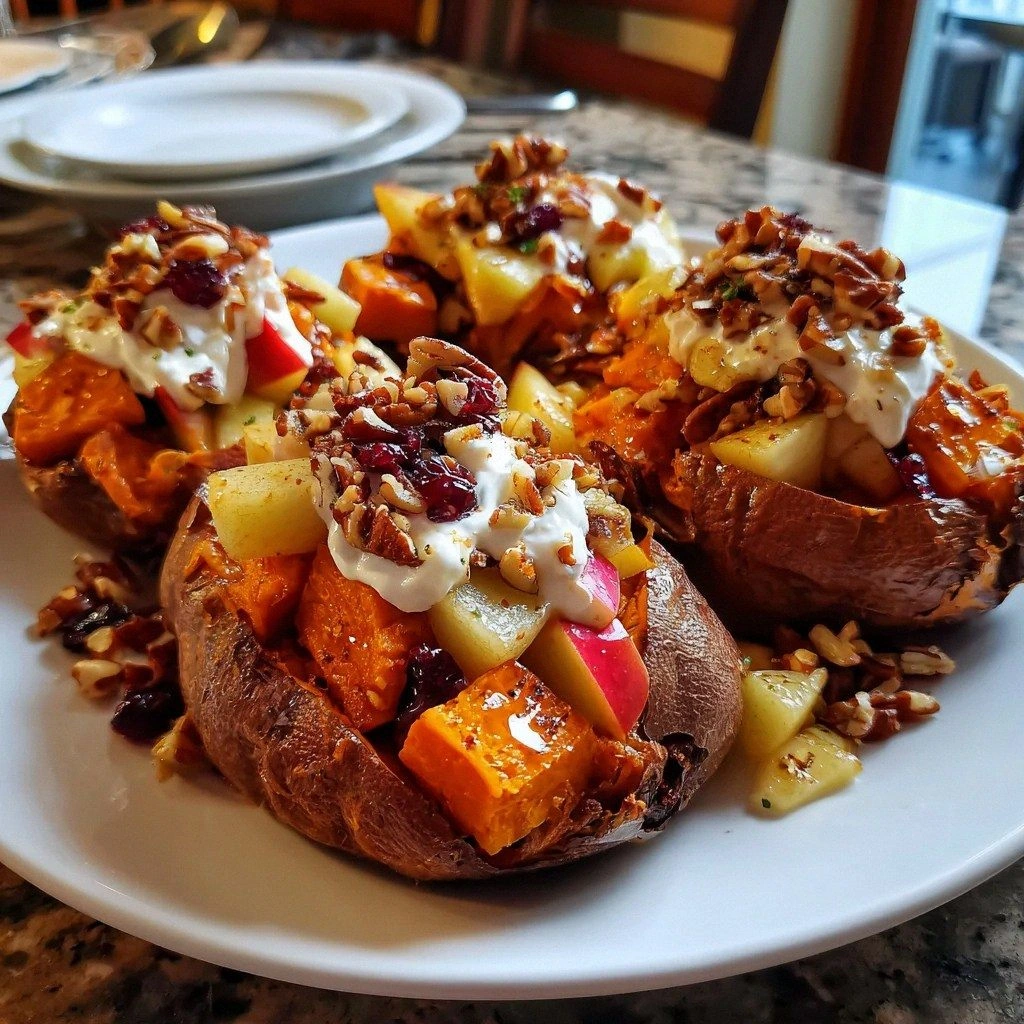
- Spoon the apple mixture generously into each cavity, letting the syrup drip down the sides like edible Jackson Pollock. Scatter the chopped pecans over the apples; they will toast further in the final blast of heat. Return the pan to the oven for eight to ten minutes, until the pecans smell like buttered popcorn and the tips of the apples caramelize to deep mahogany. Do not walk away—nuts go from hero to bitter charcoal faster than you can scroll TikTok.
- While everything finishes, whisk the Greek yogurt with a drizzle of maple syrup and a pinch of cinnamon until it reaches the consistency of softly whipped cream. Keep it cold; the contrast of hot apples and cool yogurt is half the pleasure. If you are feeling fancy, load the yogurt into a zip bag, snip the corner, and pipe elegant zigzags over each potato. Otherwise, a modest dollop works just fine—rustic is the new refined, right?
- Plate each potato on a warm rimmed dish to catch the syrupy runoff. Finish with a final flutter of flaky sea salt over the yogurt; the salt crystals dissolve on contact but leave tiny pops of salinity that make the sweet notes sing. Serve immediately, preferably with a fork and a sense of urgency—like all good comfort food, these wait for no one. Sit down, take the first bite, and enjoy the silence that follows; conversation stops when flavor this good shows up to the party.
That's it—you did it. But hold on, I've got a few more tricks that'll take this to another level...
Insider Tricks for Flawless Results
The Temperature Rule Nobody Follows
Most home cooks roast sweet potatoes at 350°F because that is what their mothers did, and while nostalgia is sweet, it is also slow and stringy. Four-hundred degrees is the magic threshold where starches gelatinize quickly, cell walls break down, and natural sugars caramelize instead of just steaming. If you are feeding impatient toddlers—or hangry adults—this single tweak cuts cooking time by fifteen minutes and yields a fluffier interior. Just remember to rotate the pan halfway for even browning; ovens have hot spots the way teenagers have mood swings.
Why Your Nose Knows Best
Professional chefs rely on thermometers, but home cooks should trust their nostrils. When the aroma shifts from raw starch to fragrant sweet earth, your potatoes are five minutes from done. The same goes for pecans: when you can smell buttered popcorn down the hallway, yank them out immediately; carryover heat will finish the toasting. A friend tried skipping this olfactory alarm once and served nuts that tasted like burnt coffee grounds—her family still jokes about “charcoal-chic” at Thanksgiving.
The Five-Minute Rest That Changes Everything
Resting meat is common knowledge, but resting sweet potatoes? Game-changer. Five minutes on the counter allows starches to retrograde slightly, so when you slice them open the flesh holds its shape instead of collapsing into sad orange mush. Tent loosely with foil to retain heat but leave a vent so steam escapes; otherwise you are steaming the skin you worked so hard to crisp. Use the downtime to taste the apple mixture and adjust spices—this is your last chance to rescue a clove-crazy situation.
The Cranberry Soak Secret
If your dried cranberries taste like sugary gravel, revive them in hot apple cider for ten minutes. They plump into juicy gems that burst with tart wine-like flavor when bitten. Pat them dry before stirring into the apples so excess moisture does not dilute your glossy syrup. Bonus: you now have cranberry-infused cider to sip while you cook—chef’s treat.
Creative Twists and Variations
This recipe is a playground. Here are some of my favorite ways to switch things up:
Savory-Sweet Bacon Rodeo
Swap the maple syrup for two tablespoons of dark brown sugar and fold in crumbled crispy bacon along with the pecans. The smoky-salty punch plays off the sweet potato like a country song meets city lights. Finish with chive ribbons instead of yogurt for a steakhouse vibe that will convert even the “I hate sweet stuff” crowd.
Pumpkin-Pie Passport
Replace half the apples with diced firm pears and stir two tablespoons of canned pumpkin puree into the maple reduction. Add a pinch of ground ginger and allspice to teleport your mouth straight to Thanksgiving. Top with toasted pepitas for crunch that feels like sweater weather in your hand.
Tropical Escape Route
Sub coconut oil for butter, use pineapple juice instead of maple syrup, and fold in toasted coconut flakes and macadamia nuts. Add a tiny pinch of cardamom and finish with lime-zested yogurt. Close your eyes and you are on a beach where sweet potatoes grow in sand and autumn never shows up to the party.
Sugar-Free Kudos
For diabetic friends, swap maple syrup with powdered monk-fruit sweetener and a splash of vanilla extract. The apples provide enough natural sweetness to keep things lively without spiking blood sugar. Add extra cinnamon for natural sweetness perception and finish with unsweetened whipped Greek yogurt.
Breakfast Sundae
Chill the roasted potatoes overnight, then split and layer with vanilla yogurt, granola, and the apple mixture for a breakfast that feels like dessert. Drizzle with warm peanut butter and tell your coworkers you had “fruit and whole grains” for breakfast—technically true, deliciously sneaky.
Fiery Heat-Seeker
Stir a pinch of cayenne and a squeeze of chipotle paste into the maple glaze. The capsaicin heightens your perception of sweetness, creating a sweet-heat tango that makes taste buds salsa dance. Finish with cilantro instead of yogurt for a south-of-the-border twist that defies geography in the best way.
Storing and Bringing It Back to Life
Fridge Storage
Cool the stuffed potatoes completely, then nestle them into an airtight container—glass works best because it will not absorb maple perfume. They will keep four days in the fridge, though the pecans may soften slightly. Store any leftover apple mixture separately; it doubles as an oatmeal topping or ice-cream sauce. If you added yogurt on top, scrape it off before storing to prevent watery separation.
Freezer Friendly
Wrap each cooled potato (without yogurt) in plastic wrap, then foil, and freeze up to two months. Label with the date; sweet potatoes can develop freezer burn that tastes like cardboard left in the rain. Thaw overnight in the fridge, then reheat in a 375°F oven for twenty minutes. Add fresh pecans for crunch resurrection.
Best Reheating Method
Microwaves turn these beauties into sad wet socks, so use the oven or air-fryer. Place the potato in a small baking dish with a splash of water, cover with foil, and heat at 350°F for fifteen minutes. Remove the foil for the last five to re-crisp the pecans. Add a tiny splash of maple syrup over the apples to refresh the glaze, then top with cold yogurt for the hot-cold contrast that makes grown adults close their eyes in gratitude.