I still remember the night I ruined what was supposed to be a glamorous dinner party. There I stood in my tiny apartment kitchen, sleeves rolled up, juggling six different pots while my guests sipped wine in the living room. My ambitious plan? Hand-folded dumplings, three different dipping sauces, and some complicated soup that required a culinary degree I clearly didn't possess. Thirty minutes later, I had a sticky mess of burst wrappers, scorched broth, and a smoke alarm serenading my mortified friends. We ended up ordering pizza while I quietly plotted my revenge on the entire concept of dumpling soup.
Fast forward three months, and I'm spooning what looks like liquid gold into bowls, the aroma wrapping around me like a warm blanket. My best friend takes one bite, closes her eyes, and whispers, "This is what you were trying to make that night, isn't it?" She was right, but also so wrong. This version wasn't just better — it was embarrassingly simple, ridiculously forgiving, and tasted like I'd spent years studying under a noodle master in some hidden alleyway. The secret? I stopped trying to make everything from scratch and started respecting the beauty of a frozen dumpling that knows exactly what it's doing.
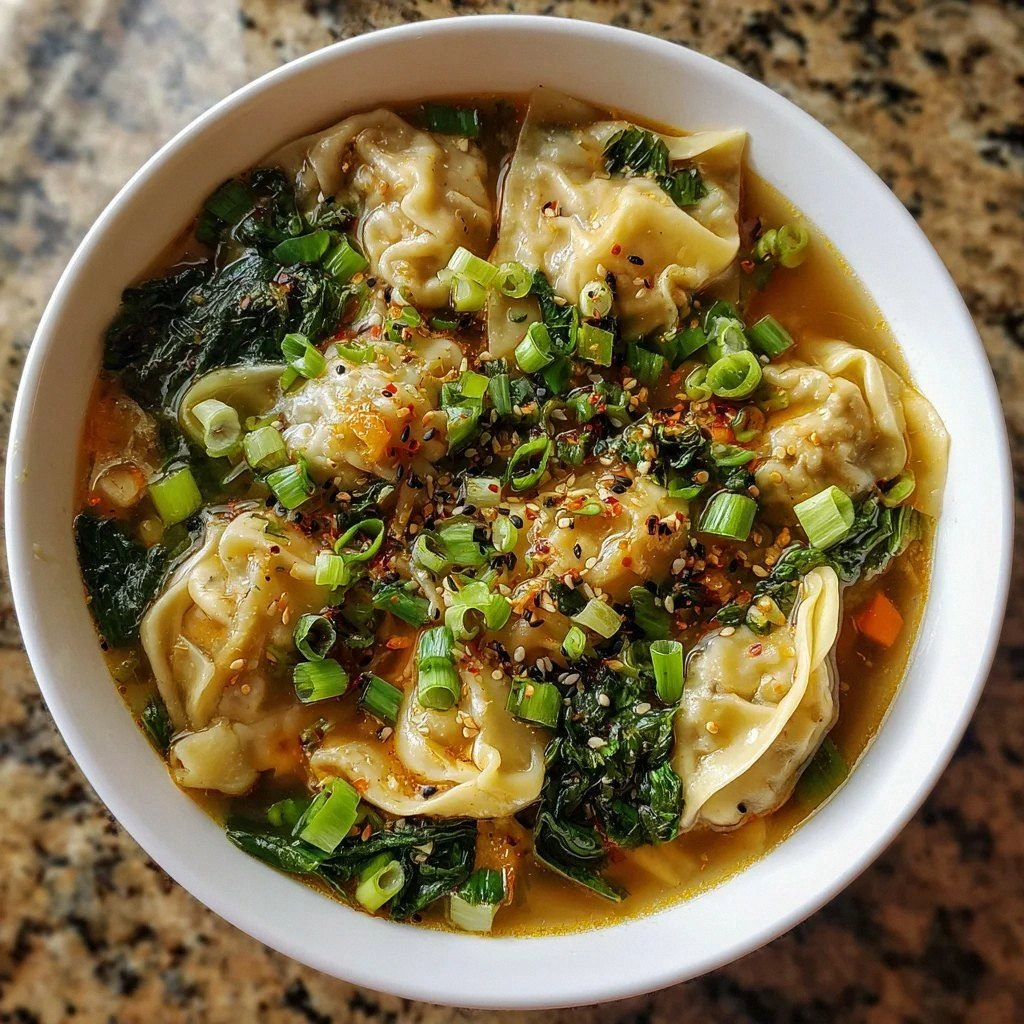
Picture this: It's raining outside, you're in pajama pants that should have been retired three years ago, and your refrigerator contains nothing but questionable leftovers and that bottle of wine you've been saving for a special occasion. In fifteen minutes, you could be ladling silky broth over tender dumplings that bob like happy little boats, their pleated edges catching droplets of fragrant oil. The spinach wilts into emerald ribbons, the ginger hits your nose with that perfect spicy snap, and suddenly your cramped kitchen feels like the coziest restaurant in the city.
This isn't just another soup recipe — it's your new emergency comfort protocol, your impressive dinner party trick, your "how does she do it" moment. I dare you to taste this and not go back for seconds. Actually, I double-dog dare you, because I ate half the batch before anyone else even knew it existed. Let me walk you through every single step — by the end, you'll wonder how you ever made it any other way.
What Makes This Version Stand Out
Lightning Fast: We're talking fifteen minutes from hungry to happy. While other recipes demand you fold dumplings until your fingers cramp, we're embracing the frozen food aisle's greatest gift to humanity. These dumplings are already perfectly seasoned, expertly pleated, and waiting patiently in your freezer like tiny edible time capsules.
Flavor Bomb Broth: Most recipes treat the broth like an afterthought, but we're building layers faster than a Netflix drama. Fresh ginger and garlic aren't just suggestions here — they're non-negotiable aromatics that transform basic chicken stock into something that tastes like it simmered for hours while you weren't watching.
Texture Paradise: Here's where we get sneaky. The dumplings release just enough starch to give the broth that restaurant-quality silkiness, while maintaining their structural integrity. No more sad, exploded dumplings bleeding their delicious filling into the void.
Green That Actually Stays Green: Forget the army-green spinach that haunts most soups. We're adding it at the exact moment it needs exactly the heat it wants, resulting in vibrant, tender greens that still have life in them.
Customization Station: Vegetarian friend coming over? Swap in veggie dumplings and mushroom broth. Need to impress someone with spice tolerance? A spoonful of chili crisp and suddenly you're a culinary daredevil. This recipe bends but never breaks.
Leftover Legend: This soup actually improves overnight, the flavors marrying like they attended a particularly successful speed-dating event. The dumplings hold their texture better than any noodle I've ever met, making tomorrow's lunch feel intentional rather than desperate.
One-Pot Wonder: Because doing dishes is the enemy of cozy. Everything happens in a single pot large enough to hold your dreams and dinner simultaneously. Future you, currently binge-watching shows in pajamas, will thank present you for this gift.
Alright, let's break down exactly what goes into this masterpiece...
Inside the Ingredient List
The Flavor Base
The chicken broth is your canvas, but not all broths are created equal. I've made this with everything from homemade stock that took six hours to the bargain basement stuff that cost less than a candy bar. Here's the truth: low-sodium boxed broth wins every time. It gives you control over the salt level, which is crucial when you're adding soy sauce later. Full-sodium broth turns this into a salt lick that even deer would reject. If you've only got regular broth, dilute it with two cups of water and taste as you go — your blood pressure will thank you, and your taste buds won't know the difference.
Fresh ginger is non-negotiable, and I will die on this hill. That powdered stuff in your spice rack? It's like comparing a live concert to a ringtone. Fresh ginger brings heat, brightness, and that mysterious quality that makes people ask, "What's in this?" Peel it with a spoon — yes, a spoon — because it gets into every nook and cranny while wasting almost nothing. Grate it directly into the pot so none of those precious oils escape to your cutting board.
The Texture Crew
Frozen dumplings are the heroes here, but not all frozen dumplings deserve your love. Look for brands that feel heavy for their size — that's a sign of generous filling and properly made wrappers. Pork and chicken both work beautifully, but avoid shrimp dumplings for this soup; they tend to overcook and turn rubbery faster than you can say "dinner party disaster." Check the ingredient list: if you can't pronounce half the items, keep walking. The freezer aisle at your Asian grocery store is a goldmine, but I've had excellent luck with mainstream brands too.
Sesame oil is your finishing move, and a little goes a long way. Buy the dark, toasted kind — it should smell nutty and intense, not like neutral cooking oil. The good stuff comes in tiny bottles because you use drops, not glugs. If your sesame oil smells like nothing or tastes bitter, it's either fake or rancid, both crimes against humanity. Store it in the fridge and it'll last longer than your last relationship.
The Unexpected Star
Fresh spinach gets maligned as boring, but hear me out: it's the perfect sponge for this broth. Baby spinach wilts almost instantly, while mature spinach needs an extra minute but holds up better to reheating. Bok choy brings a subtle cabbage sweetness and retains more crunch, making it feel like a full meal rather than a side dish. Can't decide? Use both — this isn't communist Russia, you can have options. The key is adding greens at the very end, so they stay vibrant instead of that sad, olive color that screams "I've given up."
The Final Flourish
Green onions are your confetti, your fresh pop, your reminder that you have your life together even if everything else is chaos. Slice them on the bias — diagonal cuts — because they look fancier and release more flavor. The white parts go in early for mild onion sweetness, the green parts get sprinkled on top for color and crunch. If your green onions have been languishing in the fridge, revive them in ice water for ten minutes; they'll perk up like they spent a week at a spa.
Everything's prepped? Good. Let's get into the real action...
The Method — Step by Step
- Start with your largest, heaviest pot — the one that makes you feel like a serious cook even if you're still in pajamas. Set it over medium heat and let it warm up for a full minute. This isn't wasted time; it's insurance against cold spots that'll make your aromatics sulk instead of sing. Drizzle in a teaspoon of neutral oil — not sesame yet, that's our finishing move. Swirl the oil around so it coats the bottom like a thin, shiny lake.
- Now watch this part closely: add your minced garlic and grated ginger. The moment they hit the oil, they should sizzle like applause. If they just sit there looking bored, your pot isn't hot enough. Stir constantly for thirty seconds — yes, count them out — until your kitchen smells like you've been transported to a night market in Taipei. This is the foundation of flavor, and rushing it is like skipping foreplay. Don't walk away to check your phone; Instagram will still be there in thirty seconds.
- Pour in your chicken broth, but do it slowly and dramatically because we're cooking here, not dumping chemicals. Six cups should do it, but if you're feeding a crowd or want leftovers (smart move), go up to eight. Crank the heat to high and bring it to a rolling boil. This isn't the time for gentle simmering; we want action, bubbles, steam hitting your face like a facial from the inside. While you're waiting, this is the perfect moment to open that bottle of wine. You've earned it.
- Here's where most recipes get it completely wrong — they add dumplings to lukewarm broth and wonder why they fall apart. Your broth needs to be dancing, bubbling like it's happy to be alive. Carefully drop in your frozen dumplings, one by one, like you're introducing them to a hot tub. They'll sink at first, then float as they cook. Don't crowd them; if you're using a smaller pot, work in batches. Stir gently once, just to make sure nothing's sticking, then back away and let them do their thing.
- Set your timer for six minutes — not five, not seven. Six minutes is the sweet spot where dumplings are cooked through but haven't surrendered their structural integrity. While they bubble away, slice your green onions and wash your spinach. This is the moment of truth: after six minutes, cut one dumpling in half. The filling should be hot all the way through, the wrapper should look translucent at the edges, and it should still hold together when you lift it with a spoon. If it falls apart, you've overcooked them; rescue the rest immediately.
- Reduce the heat to medium and add your soy sauce — two tablespoons for the cautious, three for the bold. Stir in the white parts of your green onions. Now taste the broth. It should make you close your eyes and make involuntary happy sounds. If it's too salty, add a cup of water. Too bland? Another splash of soy or a pinch of salt. This is your soup, and you're the boss of flavor.
- Add your greens — spinach, bok choy, or both — and push them down into the hot broth. They'll wilt almost instantly, turning bright green and glossy. This takes thirty seconds, maybe a minute for heartier greens. You're not cooking them into submission; you're giving them a warm bath. They should still have texture, still look alive, not like the sad vegetables that haunt cafeteria steam tables.
- Turn off the heat completely and drizzle in your sesame oil. One teaspoon, maybe two if you're feeling dangerous. Stir once, gently, like you're folding clouds. Ladle into bowls immediately — this soup waits for no one. Garnish with the green parts of your onions, maybe some chili oil if you like it hot. Serve with a big spoon and no apologies.
- That's it — you did it. But hold on, I've got a few more tricks that'll take this to another level...
Insider Tricks for Flawless Results
The Temperature Rule Nobody Follows
Here's what separates good soup from soul-restoring soup: temperature control. Your broth needs to be hot enough to cook dumplings quickly but not so hot that they disintegrate like my willpower around fresh bread. Think of it like a jacuzzi — hot enough to relax, not so hot that you jump out screaming. After adding dumplings, you want a gentle bubble, not a violent boil. If the surface is dancing like it's at a concert, turn it down. If it's barely moving, nudge it up. Your dumplings will thank you by staying intact and tasting like they were made by someone who cares.
Why Your Nose Knows Best
Forget timers — your nose is the most sophisticated piece of kitchen equipment you own. When the garlic and ginger hit the oil, they should smell bright and sharp, never bitter or burnt. If you catch a whiff of acrid anything, you've gone too far. Start over. Yes, I said start over, because building on burnt aromatics is like trying to fix a bad relationship by ignoring the problems. When the broth is ready, it should smell like something you'd pay twelve dollars for in a restaurant. Close your eyes and inhale — if you don't make a little involuntary "mmm" sound, it needs something. More ginger? A splash of soy? Trust that instinct.
The 5-Minute Rest That Changes Everything
I know, I know — you're hungry, the soup smells incredible, and your willpower is hanging by a thread. But here's the thing: this soup gets better if you let it rest for five minutes off heat before serving. Not ten minutes, not two hours — five. This lets the flavors meld, the temperature even out, and the greens settle into their new glossy lives. Cover the pot and set a timer. Use these five minutes to pour wine, find the good bowls, or just stare out the window like you're in a cooking show. When you come back, the soup will taste more cohesive, more intentional, more like you meant to make something this good.
The Garnish Game-Changer
Stop treating garnishes like optional decorations — they're the final seasoning that takes this from good to restaurant-quality. Those green onion tops aren't just for color; they add fresh onion bite that wakes up every spoonful. A few drops of chili oil don't just make it pretty; they bloom in the hot broth and create flavor pockets that surprise and delight. Even a sprinkle of white sesame seeds adds nuttiness and crunch. If you wouldn't serve soup without salt, don't serve it without its garnishing friends. They're not trying to be fancy; they're trying to make your dinner the best version of itself.
Creative Twists and Variations
This recipe is a playground. Here are some of my favorite ways to switch things up:
The Mushroom Maven
Swap chicken broth for mushroom broth and use veggie dumplings for a version that's somehow even more umami-rich than the original. Add sliced shiitakes with the aromatics — they'll release their earthy essence into the broth. Finish with a splash of rice vinegar for brightness. Vegetarians will weep with joy, and meat-lovers won't miss a thing. The mushroom broth makes it taste like it simmered for hours while you were doing something more interesting.
The Heat Seeker
Add two tablespoons of chili crisp when you add the soy sauce, then drizzle more on top because you're not playing around. Throw in some fresh Thai chilies with the aromatics — they'll infuse the broth with slow-building heat that sneaks up on you. Keep milk nearby for the faint of heart. This version pairs perfectly with cold beer and people who think they can handle spice but definitely can't.
The Deluxe Edition
Add sliced shiitake mushrooms and baby corn with the dumplings for a version that feels like takeout but tastes like home. A handful of enoki mushrooms at the very end adds texture and makes you look like someone who shops at specialty stores. This is what you make when you want to impress someone but still be able to eat in pajamas.
The Breakfast Champion
Sounds weird, but hear me out: use pork dumplings, add a handful of baby spinach, and crack an egg right into the simmering broth. The egg poaches in the soup, the yolk breaks and enriches the broth, and suddenly you have breakfast for dinner that feels intentional rather than desperate. Add a dash of white pepper and you've basically invented the best hangover cure known to humanity.
The Clean-Out-The-Fridge
Got half a bell pepper? Slice it thin and add it with the aromatics. That sad carrot in the crisper? Ribbon it with a peeler and toss it in. This soup is shockingly tolerant of whatever vegetables need using up. Just remember the rule: hardy vegetables go in early, delicate ones go in at the end. I've made versions with everything from corn to snap peas, and it's never been less than delicious.
The Luxury Upgrade
Add a splash of dry sherry with the broth for depth that tastes like you went to cooking school. Use homemade chicken stock if you have it, or doctor up boxed stock by simmering it with onion skins and carrot tops for twenty minutes. Finish with white truffle oil instead of sesame oil — just a few drops because we're being fancy, not ridiculous. This is what you make when you want to propose marriage or apologize for something expensive.
Storing and Bringing It Back to Life
Fridge Storage
This soup keeps beautifully for up to four days in the refrigerator, but here's the key: store the dumplings separately if possible. They'll keep their texture better, and you can reheat them gently in the broth. Use airtight containers — glass is best because it won't absorb the garlic and ginger flavors that will haunt plastic for eternity. If you've already mixed everything together, no worries — just know that the dumplings will be softer on day two, which some people actually prefer. The broth will thicken slightly as the starch from the dumplings continues to work its magic, making tomorrow's lunch feel even more luxurious.
Freezer Friendly
Here's where we get strategic: freeze the broth separately from the dumplings for best results. The broth freezes into flavor cubes that you can pop out and melt into fresh dumplings anytime. Use ice cube trays for single servings, or muffin tins for family portions. Frozen, they'll keep for three months — though good luck keeping them around that long. When you're ready, just drop the frozen broth cubes into a pot with a splash of water, bring to a boil, and add fresh or frozen dumplings. It's like having a emergency comfort food kit that requires zero planning.
Best Reheating Method
Forget the microwave — it turns dumplings into rubber balls and the broth into hot spots that could scorch your tongue. Instead, reheat gently on the stovetop over medium heat, stirring occasionally. Add a splash of water or broth because the original liquid will have thickened. If you're reheating dumplings that have already been cooked, add them during the last two minutes just to warm through. For an extra touch, refresh the garnishes — new green onions, a drizzle of sesame oil, maybe some fresh chili. It'll taste like you made it from scratch, and only you'll know you're eating leftovers like a kitchen wizard.