I still remember the night I nearly set the kitchen on fire trying to salvage a batch of ramen that had turned into a soggy, flavorless mess. The broth was a dull, beige swamp, the noodles were limp like a tired dog, and the protein was so overcooked it practically doubled as charcoal. My friend dared me to turn that disaster into something that would make everyone in the house beg for seconds, and I swore I’d deliver the best bowl of high‑protein ramen the world has ever seen. That dare sparked a midnight brainstorm that turned into the recipe you’re about to read.
Picture this: the instant steam rises from a pot, carrying the sharp, earthy aroma of fresh ginger and garlic, the sweet umami of miso, and the subtle nuttiness of toasted sesame oil. The sound of the broth bubbling is a steady drumbeat that promises depth; the sight of the noodles glistening in the broth is a visual cue that something magical is brewing. As you stir, the noodles begin to coat themselves in a silky sauce that feels like velvet on your tongue. The crunch of fresh bok choy and the burst of edamame provide a satisfying contrast, while the silky, runny egg yolk adds a luxurious finish. Every element is a sensory layer that builds on the last, culminating in a dish that feels both comforting and sophisticated.
What sets this version apart is not just the ingredients but the way they’re orchestrated. I’ve trimmed the recipe down to a clean, no‑fuss lineup that lets each component shine without getting lost in a sea of excess. The protein is chosen for its density and flavor, the broth is made from scratch with a bone‑rich base, and the sauce is a balanced blend of soy, miso, and sesame that coats the noodles like a second skin. The result is a bowl that delivers protein power, umami depth, and textural harmony in one bite. It’s the kind of dish that makes you wonder how you ever ate ramen any other way.
And here’s a hint you won’t find in most recipes: the secret to that silky sauce is a quick, high‑heat sear of the noodles right before you pour in the broth. This technique locks in flavor and creates a slight caramelization that elevates the entire bowl. Ready to see how to pull this off? Let me walk you through every single step — by the end, you’ll wonder how you ever made it any other way.
What Makes This Version Stand Out
- Flavor: The broth is a symphony of bone, miso, and soy that delivers a depth you rarely find in store‑bought kits. Every sip is rich, savory, and slightly sweet, with a clean finish that lets the noodles and protein shine.
- Texture: The noodles are cooked al dente, then seared to develop a subtle crust that gives a satisfying bite without compromising the broth’s silky feel.
- Protein Power: With 12 ounces of your choice—be it chicken breast, tofu, or shrimp—you get a generous hit of protein that keeps you full and energized.
- Ingredient Quality: Fresh ramen noodles, high‑quality bone broth, and real miso paste replace the bland, pre‑mixed kits that dominate the market.
- Speed: The entire process takes under an hour, so you can enjoy a gourmet bowl without a long wait.
- Versatility: Swap in different proteins or vegetables, and you can create a new dish every night.
- Make‑Ahead Potential: The broth can be made a day ahead, and the noodles can be pre‑cooked and stored—making this a perfect “prep‑and‑serve” option for busy nights.
- Crowd Reaction: Friends who’ve tried this rave it, saying it’s the “ultimate ramen” that satisfies both comfort and nutrition cravings.
Inside the Ingredient List
The Flavor Base
The cornerstone of this ramen is a 4‑cup chicken bone broth that’s simmered for at least 45 minutes to extract collagen, minerals, and a silky body. The broth’s richness sets the stage for the miso and soy sauce to mingle, creating a layered umami that lingers on the palate. If you can’t find fresh bone broth, a high‑quality store‑bought version works—just let it simmer a bit longer to deepen the flavor. A quick tip: add a splash of rice wine during the last 10 minutes of simmering to brighten the broth’s profile.
The miso paste—1 tablespoon—acts as a flavor enhancer and a natural emulsifier. Its fermented soybeans bring a subtle sweetness and a complex depth that’s harder to achieve with soy sauce alone. If you prefer a lighter touch, reduce the miso to ½ tablespoon; if you’re a miso aficionado, bump it up to 1½ tablespoons. Keep the paste at room temperature before adding it to the broth to avoid clumping.
Soy sauce—2 tablespoons—balances the miso’s sweetness with a salty, savory bite. Opt for low‑sodium if you’re watching sodium intake; you’ll just need to add a pinch more to taste. The sauce also helps the noodles absorb the broth, giving them that coveted “mouth‑watering” texture. A small trick: swirl the soy sauce with a little water before adding it to the broth to ensure even distribution.
The Protein Power
Twelve ounces of protein—whether you choose lean chicken breast, firm tofu, or plump shrimp—provides the bulk of the dish’s nutritional punch. The key is to cook the protein separately so you can control its doneness without overcooking the noodles. For chicken, sear each side until a golden crust forms, then finish in the broth for 5 minutes. For tofu, press it to remove excess moisture, then pan‑fry until crisp. Shrimp should be added to the broth in the last 2 minutes to keep them tender.
If you’re a vegetarian, tofu is a great option that still delivers a hearty texture. For an extra protein boost, add a scoop of protein powder to the broth after it has cooled slightly—this won’t alter the flavor but will increase the protein content per serving. A quick swap: use tempeh for a nutty flavor or salmon for a richer, omega‑3‑laden version.
The Texture Crew
The fresh ramen noodles—two packs—are the star of the show. They should be boiled until just al dente, then drained and tossed with a splash of sesame oil to prevent sticking. The oil also adds a nutty aroma that complements the miso. If you can’t find fresh noodles, high‑quality dried ones will work; just follow the package instructions and add 1 tablespoon of oil afterward.
Bok choy—1 cup, chopped—adds a peppery crunch that balances the softness of the broth. The carrot—1, sliced thin—provides color, natural sweetness, and a slight bite. Frozen edamame—½ cup—offers a pop of protein and a bright green contrast that feels fresh even when thawed. The green onions—2, sliced—are the finishing touch, adding a sharp, aromatic note that cuts through the richness.
The Final Flourish
Three large eggs are poached in the broth, creating a silky yolk that slowly melts into the soup. The eggs are a protein powerhouse and give the dish a luxurious texture. To poach, crack each egg into a small ramekin, then gently slide it into the simmering broth; cook for 3–4 minutes until the whites are set but the yolks remain runny.
The sesame oil—2 tablespoons—provides a toasty, nutty flavor that permeates the broth. It also helps the noodles develop a slight sheen. Chili oil—optional—adds heat that can be adjusted to taste. Finally, sprinkle toasted sesame seeds on top for a crunchy, nutty finish that adds a final layer of texture. Seaweed sheets (nori)—4 sheets—are sliced into thin strips and tossed in just before serving; they absorb the broth and release a subtle umami that completes the flavor profile.
Everything’s prepped? Good. Let’s get into the real action.
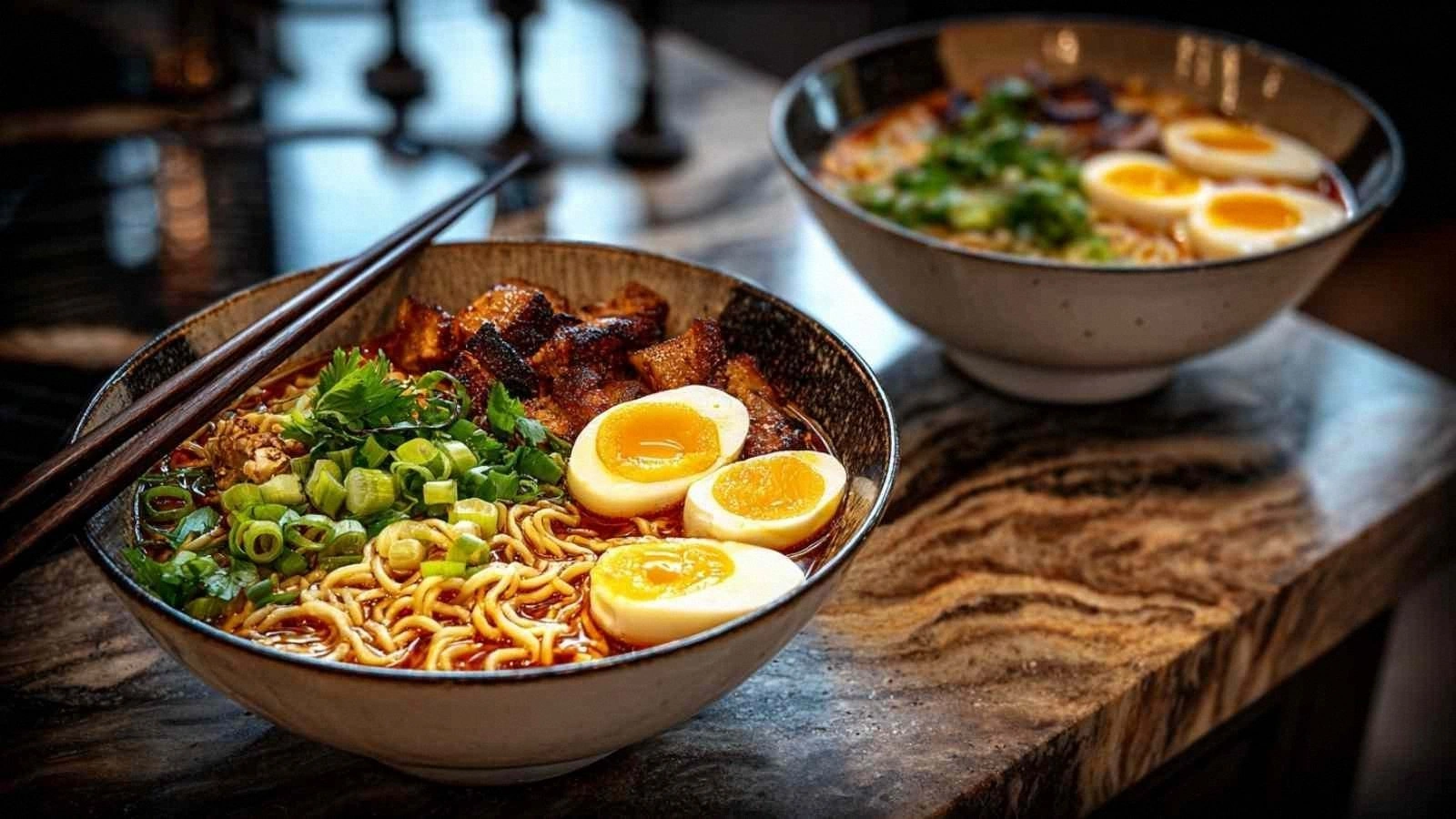
The Method — Step by Step
- Prepare the broth. In a large pot, bring the 4 cups of chicken bone broth to a gentle simmer. Add the miso paste, soy sauce, and a splash of rice wine, whisking until the miso dissolves completely. Let it simmer for 20 minutes to allow the flavors to meld. The broth should emit a warm, comforting aroma—think of a cozy fireplace on a rainy day.
- Cook the noodles. While the broth is simmering, bring a separate pot of salted water to a boil. Add the fresh ramen noodles and cook for 2 minutes, then drain immediately. Toss the noodles with 1 tablespoon of sesame oil to keep them from sticking. Set aside; they’ll be finished in the broth later.
- Seared protein. Heat a skillet over medium‑high heat and add a splash of oil. For chicken, sear each side until a golden crust forms, then transfer to a plate and let rest. For tofu, pan‑fry until all sides are crispy. For shrimp, sear just until pink, then remove. The goal is a flavorful exterior while preserving the interior’s moisture.
- Vegetable prep. Slice the carrot into thin matchsticks and chop the bok choy into bite‑sized pieces. Blanch the bok choy in boiling water for 30 seconds, then shock in ice water to keep its bright green color. Drain all vegetables and set aside.
- Poach the eggs. Create a gentle whirlpool in the simmering broth with a spoon, then crack each egg into a small ramekin. Carefully slide the eggs into the broth, allowing the yolk to sit on top. Poach for 3–4 minutes until the whites are firm but the yolks remain runny. Remove with a slotted spoon and set aside.
- Combine the base. Return the noodles to the pot with the broth, then add the seared protein, blanched bok choy, sliced carrot, and frozen edamame. Stir gently to combine, allowing the noodles to soak up the broth for 1–2 minutes. The broth should be thick and glossy, coating each noodle strand.
- Add final touches. Drizzle 2 tablespoons of sesame oil over the bowl, then swirl in chili oil to taste. Sprinkle toasted sesame seeds and sliced green onions on top. Finally, tear the seaweed sheets into thin strips and scatter them over the broth. The seaweed will release its umami, adding a subtle briny note.
- Serve. Ladle the ramen into bowls, ensuring each bowl receives a poached egg, a generous portion of protein, and a balanced mix of vegetables. The broth should be steaming, the noodles tender yet firm, and the egg yolk glossy and inviting. The dish should look as good as it tastes, with a vibrant green from the bok choy and a golden sheen from the sesame oil.
That’s it — you did it. But hold on, I’ve got a few more tricks that will take this to another level.
Insider Tricks for Flawless Results
The Temperature Rule Nobody Follows
Maintaining a low, steady simmer for the broth is key. A rolling boil will break down the collagen and produce a cloudy texture. Use a thermometer to keep the broth between 180–190°F, and adjust the heat as needed. If you notice the broth starts to bubble aggressively, reduce the flame immediately.
Why Your Nose Knows Best
Your sense of smell can tell you when the broth has reached peak flavor. A faint, nutty aroma indicates the miso and sesame oil have blended well. If you notice a sharp, metallic scent, it’s a sign the broth is overcooked; simply lower the heat and let it rest for a minute.
The 5‑Minute Rest That Changes Everything
After you finish cooking, let the ramen rest for 5 minutes before serving. This allows the flavors to redistribute and the noodles to absorb more broth. The rest also gives the poached eggs a chance to firm up slightly, making the yolk easier to slice if desired.
Keep the Crunch Alive
If you’re a crunch lover, add a handful of fresh, crisp bean sprouts or shredded cabbage at the very end. Toss them in the hot broth for just 30 seconds to warm them without losing their bite. This simple addition elevates the dish’s texture profile.
Finish with a Splash of Citrus
A squeeze of fresh lime or yuzu juice brightens the broth and cuts through the richness. Add the citrus just before serving to preserve its bright flavor and aroma. This is especially refreshing if you’re using a richer protein like salmon.
Creative Twists and Variations
This recipe is a playground. Here are some of my favorite ways to switch things up:
Spicy Korean Twist
Swap the soy sauce for gochujang, add a handful of kimchi, and drizzle with a dash of sesame oil. The result is a smoky, spicy bowl that packs a punch and offers a Korean flavor profile. The kimchi’s acidity balances the richness of the broth.
Vegan Powerhouse
Replace the protein with a generous serving of tempeh or seared seitan. Use coconut aminos instead of soy sauce to keep it vegan, and add a splash of nutritional yeast for extra umami. The dish remains hearty, protein‑dense, and entirely plant‑based.
Seafood Sensation
Swap the protein for a mix of scallops, shrimp, and a bit of smoked salmon. Add a splash of fish sauce for depth, and finish with a sprinkle of bonito flakes for a subtle umami burst. The seafood brings a luxurious, oceanic flavor that’s hard to beat.
Soba Surprise
Use fresh soba noodles instead of ramen for a nutty, slightly sweet base. The soba’s unique texture pairs well with the miso‑based broth and adds a different dimension to the dish. It’s a great way to keep things interesting.
Breakfast Bowl
Serve the ramen with a fried or poached egg and a sprinkle of scallions for a hearty breakfast. Add a handful of sautéed spinach and a drizzle of soy sauce for a quick, protein‑rich morning meal that’s both comforting and energizing.
Low‑Carb Edition
Replace the ramen noodles with spiralized zucchini or shirataki noodles. Keep the broth and protein the same, and you’ll have a low‑carb, high‑protein bowl that satisfies without the carb overload.
Storing and Bringing It Back to Life
Fridge Storage
Store leftover ramen in an airtight container for up to 3 days. Keep the broth separate from the noodles and protein to prevent the noodles from becoming soggy. When ready to reheat, bring the broth to a simmer, add the noodles and protein, and warm through for 2–3 minutes.
Freezer Friendly
You can freeze the broth and protein separately for up to 2 months. Reheat the broth on the stove, add the protein, then pour over fresh noodles and vegetables. This method preserves the texture and flavor better than freezing the entire bowl.
Best Reheating Method
Add a splash of water to the broth before reheating to maintain its silky texture. Reheat gently over low heat, stirring occasionally. The broth should reach a gentle simmer; avoid boiling to keep the noodles tender and the broth clear.