I was standing in a cramped apartment kitchen, staring at a half‑cooked tuna steak that had been left in the fridge for too long. The fish was starting to smell like a bad idea, and I knew I had to salvage it before it turned into a culinary disaster. I reached for my trusty pantry and pulled out a jar of chermoula paste, a handful of fresh herbs, and a cucumber I’d just bought from the market. The moment I combined the tuna with the bright, herbaceous sauce, the kitchen filled with a citrusy, peppery aroma that felt like a Mediterranean summer breeze. That was the spark that turned a potential mess into the Sweet Chermoula Tuna Tartare that I’m about to reveal.
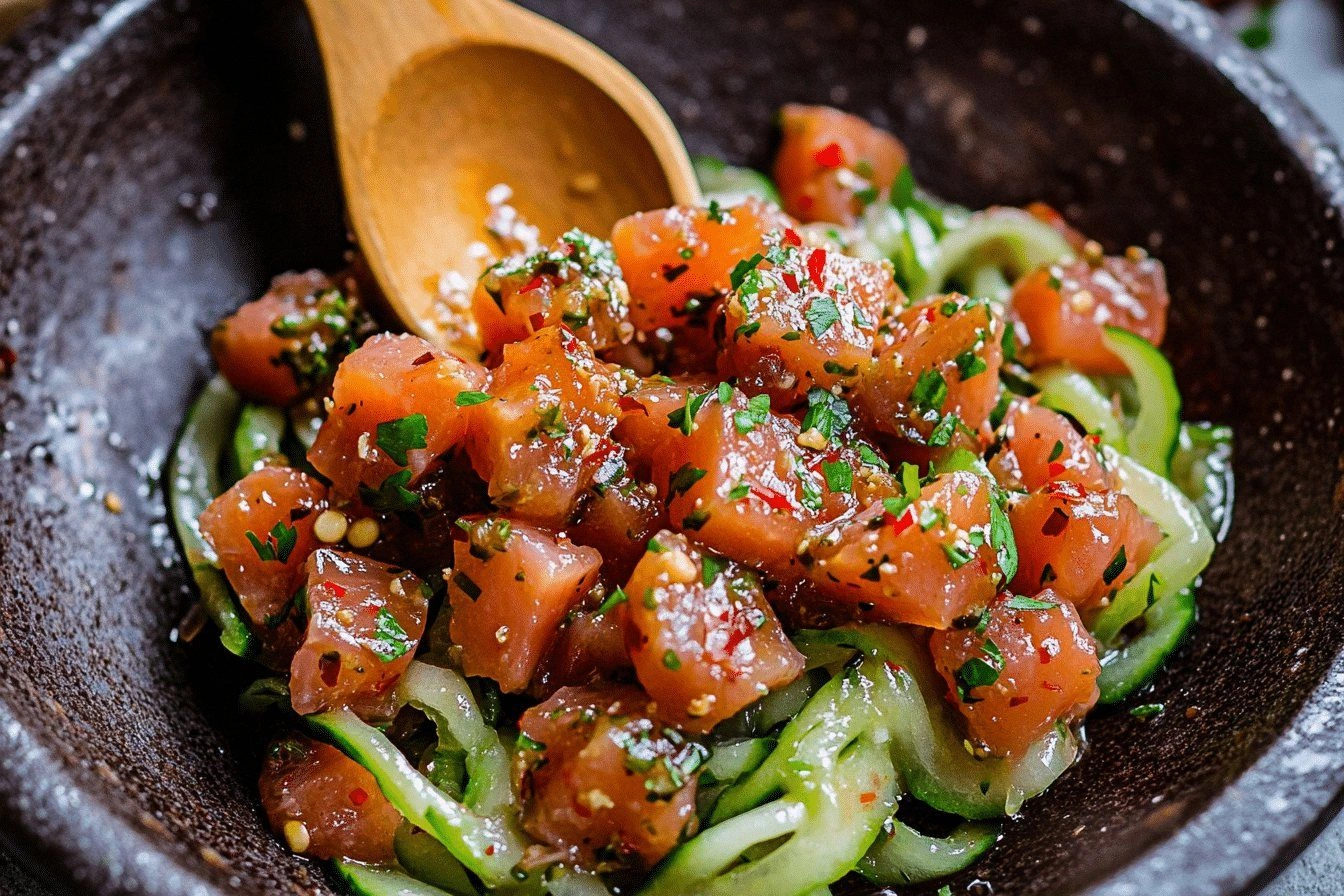
Picture this: a plate of silky, diced tuna that glistens with a glossy, herb‑infused glaze, nestled beside a bed of cool cucumber noodles that crunch like a whisper. The chermoula, with its blend of cilantro, parsley, garlic, lemon, and a dash of cumin, coats every bite like velvet, while a splash of olive oil ties everything together into a harmonious texture. It’s a dish that feels both luxurious and approachable, perfect for a dinner party or a quiet weeknight when you want something special without the fuss of a full meal. The best part? It’s ready in minutes, and the flavors evolve the longer you let it sit—just a few minutes of marination and you’re already tasting a symphony of fresh, zesty, and slightly smoky notes.
Most people think tuna tartare is just another raw fish dish, but this version is a game‑changer. The sweet chermoula brings a depth that raw fish alone can’t match, while the cucumber noodles add a refreshing crunch that keeps the palate from becoming overwhelmed. The recipe’s simplicity—no heavy sauces, no cooking—means you can whip it up in under ten minutes, but the result is a dish that feels like it took hours to craft. I dare you to taste this and not go back for seconds; the burst of citrus and herb will have you reaching for more. If you’ve ever struggled to make raw fish dishes taste exciting, you’re not alone—and I’ve got the fix.
So, let’s dive into every single step. By the end, you’ll wonder how you ever made tuna tartare any other way. And trust me, you’ll be telling everyone you’re the one who invented this new classic. Ready? Let’s get started.
What Makes This Version Stand Out
- Flavor: The chermoula paste infuses the tuna with a bright, herbaceous kick that cuts through the fish’s natural richness. The citrusy lemon balances the earthiness of cumin and paprika, creating a layered taste that lingers on the tongue.
- Texture: The diced tuna is kept moist by the olive oil and the acidic lemon, while the cucumber noodles provide a crisp, cool contrast that prevents the dish from feeling heavy.
- Visual Appeal: The vibrant green of the herbs and the pale pink of the tuna create a color palette that’s as pleasing to the eye as it is to the palate. The dish can be plated in a ring or piled into a bowl, offering versatility for different occasions.
- Ease of Preparation: No cooking required—just dice, mix, and serve. The only “cooking” is a quick sauté of optional pine nuts, which adds texture without taking time.
- Healthful: Packed with omega‑3 fatty acids from the tuna and healthy fats from the olive oil, this dish is a lean protein powerhouse that also delivers essential vitamins from the fresh herbs.
- Make‑Ahead Friendly: The tartare can be prepared up to two hours in advance, allowing the flavors to meld beautifully. Just keep it chilled until you’re ready to serve.
- Versatility: Swap the tuna for salmon or use it as a topping for toast or crackers. Add a splash of soy sauce for an umami twist, or a dash of fish sauce for a deeper depth.
- Party‑Ready: The dish can be plated on a platter with a drizzle of extra olive oil, a sprinkle of toasted pine nuts, and a few fresh herb sprigs for an eye‑catching centerpiece that will impress guests.
Alright, let's break down exactly what goes into this masterpiece…
Inside the Ingredient List
The Flavor Base
Chermoula paste is the soul of this tartare. It’s a fragrant blend of cilantro, parsley, garlic, lemon, and a handful of spices that together create a complex, Mediterranean flavor profile. If you’re missing a jar of chermoula, you can whip up a quick version by blending equal parts fresh cilantro and parsley with a clove of garlic, a squeeze of lemon juice, a teaspoon of cumin, a pinch of paprika, and a splash of olive oil. Skipping the paste would turn the dish into plain tuna, losing that vibrant, aromatic punch that makes it stand out.
The Texture Crew
Cucumber noodles are the unsung hero that provides a refreshing crunch and a cool counterbalance to the warm, herbaceous tuna. Spiralizing the cucumber keeps the dish light and prevents it from feeling heavy. If you can’t find a spiralizer, a vegetable peeler will do the trick—just peel long, thin ribbons. Using a cucumber that’s firm and crisp is essential; a soft cucumber will become mushy and ruin the texture.
The Unexpected Star
Toasted pine nuts add a nutty, buttery texture that elevates the dish from simple to gourmet. The nuts should be toasted in a dry skillet over medium heat until golden and fragrant. If you’re allergic to nuts or prefer a different crunch, toasted sesame seeds or slivered almonds work as excellent alternatives. Skipping the nuts will make the dish less texturally interesting and slightly less indulgent.
The Final Flourish
Extra virgin olive oil is the binding agent that gives the tartare a silky mouthfeel. It also brings a subtle fruity note that complements the citrus and herbs. If you’re looking to reduce fat, you can replace half the olive oil with a light vinaigrette of lemon juice and a dash of fish sauce, but you’ll lose some of the silky texture. A pinch of freshly ground black pepper and a sprinkle of paprika finish the dish with a subtle heat that awakens the palate.
Everything's prepped? Good. Let's get into the real action…
The Method — Step by Step
- Dice the Tuna: Place the sushi‑grade tuna on a clean cutting board and cut it into uniform 1/4‑inch cubes. Aim for even pieces so that each cube gets an equal coating of the chermoula. If you’re nervous about raw fish, double‑check the tuna’s freshness by smelling it—there should be a mild, oceanic scent, not a sour or fishy odor. This step takes about 2 minutes, but precision here pays off in texture.
- Prepare the Cucumber: Using a spiralizer or a vegetable peeler, create long, thin ribbons from the cucumber. Rinse the noodles under cold water, then pat them dry with a paper towel to remove excess moisture. Dry cucumber noodles are essential; wet noodles will dilute the flavor and make the dish soggy. Toss the noodles in a bowl and set aside.
- Toast the Pine Nuts: Heat a small skillet over medium heat and add the pine nuts. Stir constantly until they are golden brown and fragrant—about 3–4 minutes. Remove them from the skillet and let them cool. Toasting brings out their natural oils, adding a buttery crunch that contrasts beautifully with the tuna. If you’re short on time, you can skip this step, but the texture will be noticeably different.
- Marinate the Tuna: Place the diced tuna in a shallow bowl and pour the prepared chermoula sauce over it. Gently toss to coat every cube, making sure the sauce clings to the tuna. Let the tuna rest for 5 minutes at room temperature; this allows the flavors to penetrate. If you’re making the dish ahead of time, cover the bowl with plastic wrap and refrigerate. The tuna will continue to absorb the sauce, resulting in a richer flavor.
- Season the Mix: Sprinkle the freshly ground black pepper and a pinch of paprika over the marinated tuna. Add the chopped parsley and cilantro, then fold everything together. The herbs bring a burst of green freshness that brightens the dish. If you’re using jalapeño or red chili flakes, add them now for a subtle heat. Remember, a little goes a long way—too much heat can overpower the delicate tuna.
- Assemble the Plate: Take a shallow bowl or a round plate and arrange a layer of cucumber noodles in the center. Spoon the tuna mixture over the noodles, spreading it evenly. The noodles act as a cool base that balances the warm, herbaceous tuna. If you’re plating for a group, consider using a ring mold to create a neat, circular presentation.
- Garnish: Drizzle a few extra drops of olive oil over the top for shine and richness. Sprinkle the toasted pine nuts evenly across the dish for crunch. Add a final sprinkle of fresh herbs for color and aroma. A squeeze of lemon juice right before serving adds a bright, citrusy finish that elevates the dish.
- Serve Immediately: This tartare is best enjoyed fresh, while the tuna is still firm and the cucumber retains its crunch. If you need to hold it for a short period, cover the bowl with cling film and refrigerate, but bring it back to room temperature for 5 minutes before serving to restore the tuna’s texture.
That’s it — you did it. But hold on, I've got a few more tricks that'll take this to another level. Remember, the key to a perfect tartare is the balance of flavors and textures, and a little patience goes a long way.
Insider Tricks for Flawless Results
The Temperature Rule Nobody Follows
Keeping the tuna at the right temperature is critical. If the fish is too warm, it will start to break down and become mushy. I keep the tuna chilled in a bowl of ice water for a minute before cutting, then drain it immediately. This trick locks in the firmness and gives the tuna a clean, crisp bite. If you’re working in a warm kitchen, you can place the tuna on a chilled plate right after cutting.
Why Your Nose Knows Best
Before you mix the chermoula, give it a sniff. A fresh, bright scent of citrus and herbs means the paste is fresh and ready to go. If it smells flat or sour, it’s time to toss it. The aroma is the first indicator that the flavors will be vibrant.
The 5‑Minute Rest That Changes Everything
Letting the tuna rest in the chermoula for exactly five minutes before adding the herbs is essential. This short period allows the acid from the lemon to gently “cook” the fish, enhancing its texture without turning it mushy. If you rush this step, the tuna might stay too raw and lose some of its tenderness.
Use a Sharp Knife
A dull knife can crush the tuna instead of slicing it cleanly. A sharp blade ensures each cube is uniform and maintains the fish’s structure. A well‑cut tuna also looks more appetizing, making the dish feel more luxurious.
Mind the Pine Nuts
When toasting pine nuts, keep a close eye on them—they can burn quickly. Stir constantly and remove them from heat as soon as they’re golden. Burnt pine nuts will give a bitter flavor that can ruin the dish’s delicate balance.
Adjust the Heat
If you prefer a milder version, leave out the jalapeño or chili flakes. If you love heat, add a pinch of cayenne pepper instead of just the chili flakes. The key is to taste as you go and adjust to your personal preference.
Creative Twists and Variations
This recipe is a playground. Here are some of my favorite ways to switch things up:
Salmon Surprise
Swap the tuna for sushi‑grade salmon for a sweeter, richer flavor. The salmon’s buttery texture pairs well with the chermoula and cucumber, creating a luxurious, melt‑in‑your‑mouth experience. Perfect for a special occasion.
Spicy Pineapple Twist
Add diced fresh pineapple to the tuna mixture for a tropical kick. The natural sweetness of pineapple balances the heat from the chili flakes and complements the citrusy lemon in the sauce. A refreshing variation for summer gatherings.
Smoky Paprika Variation
Replace the regular paprika with smoked paprika to introduce a subtle smoky undertone. This change adds depth and complexity, turning the dish into a smoky, herb‑laden masterpiece. Great for a cozy, autumnal meal.
Herb‑Infused Olive Oil
Infuse the extra virgin olive oil with fresh herbs like thyme or rosemary before drizzling it over the tartare. The herb‑infused oil adds a fragrant finish that elevates the overall flavor profile. A subtle but elegant touch.
Crunchy Quinoa Base
Swap the cucumber noodles for a bed of lightly toasted quinoa. The quinoa’s nutty flavor and slight crunch create a hearty base that pairs well with the tuna’s delicate texture. Ideal for a more substantial meal.
Vegan Version
Use marinated tofu cubes instead of tuna for a plant‑based take. The tofu absorbs the chermoula flavors beautifully, and the cucumber noodles provide the necessary crunch. A tasty and sustainable alternative.
Storing and Bringing It Back to Life
Fridge Storage
Store the tartare in an airtight container in the refrigerator for up to two hours. Keep the cucumber noodles separate until just before serving to preserve their crunch. If you’re prepping ahead, keep the tuna mixture chilled and add the noodles at the last minute.
Freezer Friendly
Freezing is not recommended because the tuna will lose its texture and the cucumber will become soggy. If you must freeze, separate the tuna mixture and the noodles, freeze them separately, and combine after thawing. However, the best experience is always fresh.
Best Reheating Method
Reheating is not necessary for raw fish dishes. If you accidentally chill the dish too long, let it sit at room temperature for 5 minutes before serving to restore the tuna’s firmness. Add a tiny splash of water to the bowl before plating to keep the fish moist and prevent it from drying out.