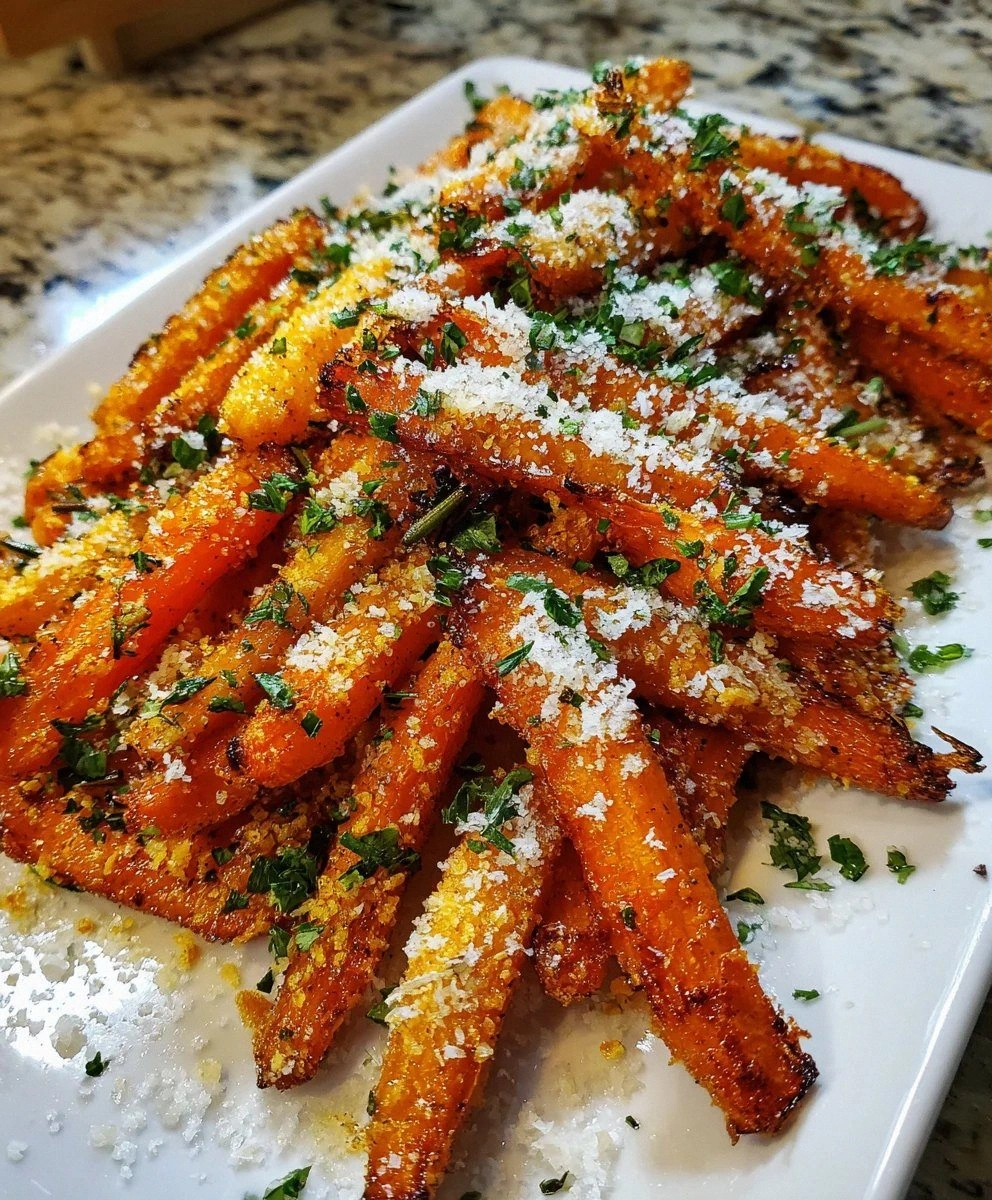
Picture this: it is 9:17 on a Tuesday night, I am standing in my kitchen wearing mismatched socks, and I have just burned an entire tray of limp, soggy carrot coins for the third time this month. The smoke alarm is serenading me like a broken kazoo, my cat is judging me from the countertop, and I am ready to swear off root vegetables forever. Then my best friend texts me a blurry photo of crackly, golden carrot fries dusted with snow-white Parmesan and dares me to replicate them. Challenge accepted, dignity optional. What followed was three weeks of obsessive testing, twenty-seven pounds of carrots, and one epiphany about the power of starch, space, and screaming-hot metal. The result? A tray of vegetables that eats like junk food, smells like a trattoria, and converts even the most stubborn carrot critic into a fiber-loving fiend. I am talking about crispy Parmesan carrots that shatter between your teeth like thin caramel, revealing sweet, tender flesh that tastes impossibly indulgent. If you have ever struggled to get a vegetable past a picky eater—or past your own jaded palate—this recipe is about to become your secret weapon. Let me walk you through every single step—by the end, you will wonder how you ever made it any other way.
What you are about to make is not the sad, steamed cafeteria carrots of your childhood. No, these are the love child of a French fry and a cheese straw, wearing a winter coat of toasted Parm and whispering promises of umami. The edges blister and lace into an airy web, thanks to a technique I borrowed from frico-making nonnas and one slightly unhinged midnight viewing of The Great British Bake Off. You will hear the snap before you even taste it, a crunch so satisfying that my neighbor once knocked on my door asking if I was breaking porcelain. The smell? Imagine garlic bread and roasted autumn leaves had a baby in a Parmesan cave. The taste? First comes sweet, then nutty, then a faint prickle of chili, and finally the mellow earthiness of rosemary that lingers like the last note of a jazz solo. I dare you to taste this and not go back for seconds; I double-dare you to stop at thirds.
Before we dive in, let me save you from the heartbreak I endured during trial batch number eleven: most internet recipes get the fundamentals wrong. They crowd the pan, under-season, under-heat, and then blame the poor carrot for turning out limp. We are going to space those sticks like social distancing champions, blast them at 425 °F convection, and use a two-stage cheese application that creates both crust and cloak. You will need one bowl, one sheet pan, and the self-restraint not to eat the entire tray straight off the parchment—okay, maybe not that last part. Picture yourself pulling this out of the oven, the whole kitchen smelling incredible, your phone already buzzing because the neighbors want in. Stay with me here—this is worth it.
What Makes This Version Stand Out
- Shatter-Crunch Factor: We are talking caramelized cheese that lacquers the carrots, creating a glass-thin shell that cracks like crème brûlée while the inside stays velvety. Other recipes settle for “slightly wrinkled”; we demand audible snap.
- Sweet-Savory Tightrope: Roasting intensifies carrot sweetness, Parmesan brings salty nuttiness, and a whisper of chili keeps your palate guessing. It is dessert and bar snack rolled into one orange wand of glory.
- One-Pan Laziness: No par-boiling, no double bowls, no breadcrumb stations. You toss, roast, finish, done. If you can operate a zester and set a timer, you can master this while binge-listening to true crime.
- Ingredient Respect: Every element pulls double duty—olive oil crisps cheese and protects carrot tips, garlic goes in raw so it roasts into mellow nuggets, rosemary perfumes the oil which then perfumes everything.
- Crowd Gas Guarantee: I have served these at baby showers, football tailgates, and once at a board meeting where the CEO literally slow-clapped. They vanish faster than free donuts in the break room.
- Make-Ahead Magic: Prep and freeze the raw coated sticks for up to two months. Roast from frozen with an extra five minutes while your guests think you are a kitchen wizard.
Alright, let us break down exactly what goes into this masterpiece without any fluff or supermarket goose chases.
Inside the Ingredient List
The Flavor Base
Carrots are the headliners, obviously, but not all carrots deserve the spotlight. Choose medium-sized ones—thick enough to become creamy inside after roasting, slender enough that you are not cutting tree trunks. If you can only find monster roots, split them lengthwise so every piece is roughly finger-sized; uniformity is the difference between burnt tips and raw hearts. Peel them ruthlessly; the skin turns papery and refuses to hold cheese. And please, buy fresh bunches with perky tops still attached. Those bagged baby carrots are just shaved-down cores swimming in chlorine water, and they will weep moisture that destroys your crust. Trust me, I have cried those tears.
Extra virgin olive oil is not negotiable. It carries fat-soluble flavors, prevents sticking, and when it hits 400 °F it starts polymerizing, helping cheese adhere like culinary Velcro. You need just enough to coat—too little and the Parmesan scorches, too much and it swims instead of sears. Salt early; it draws out surface moisture so the carrots roast rather than steam. I use kosher because the flakes dissolve fast and the measurement is forgiving. Table salt works, but picture snowflakes versus hailstones: same water, different drama.
The Texture Crew
Garlic goes in raw because we want it to mellow and tan, not to burn like bitter confetti. Mince it fine so it sticks in the crevices and turns into savory pop rocks. Onion powder disperses more evenly than fresh onion, which can dump water and wreck your crisp. Think of it as umami dust. Red pepper flakes bloom in the hot oil, releasing a gentle heat that blooms at the back of your throat after you have inhaled half the tray. If you have ever struggled with bland roasted vegetables, you are not alone—and I have got the fix.
Fresh rosemary is the piney whisper that makes carrots taste like they were kissed by a Christmas tree. Chop it just before using; the volatile oils are divas that fade fast. Dried rosemary works in a pinch, but toast it in a dry pan for thirty seconds to wake up the flavor. And here is the game-changer: add half the Parmesan now so it melts into the surface, then the rest fifteen minutes later so it forms the lacy crust. Stay with me here—this is worth it.
The Unexpected Star
Parmesan is not just a topping; it is the scaffolding. Buy the real Parmigiano Reggiano if you can—aged twenty-four months minimum—because the protein matrix forms those gorgeous lace edges when it hits direct heat. Pre-grated sawdust from a green can has cellulose that repels oil and burns black. If budget howls, Pecorino Romano is a solid understudy with saltier punch. Vegans, I respect you: nutritional yeast plus almond flour will brown and crunch, though you will lose some shatter. Whatever you do, do not dump the cheese in one go; staged application is pure magic.
The Final Flourish
Parsley is not just a pretty sprinkle; its chlorophyll hits reset between bites, keeping your palate bright and ready for more. Chop it just before serving—herbs are basically tiny balloons of flavor that pop once cut. Lemon zest micro-planed on top adds high notes that make the cheese taste nuttier by contrast. A final pinch of flaky salt on the hot carrots dissolves into glossy pockets that give you surprise salinity bombs. Everything is prepped? Good. Let us get into the real action.
The Method — Step by Step
- Preheat your oven to 425 °F on convection. If you only have conventional, bump it to 450 °F and add five minutes to the total time. Slide a heavy rimmed sheet pan onto the middle rack while the oven heats; you want that metal screaming hot so the bottoms sear instantly. Meanwhile, peel and trim two pounds of carrots, then slice them on a sharp diagonal into four-inch batons. Think steak-fry shapes, not baby coins—surface area equals crisp real estate.
- In a roomy bowl, toss the carrots with three tablespoons of extra virgin olive oil, one teaspoon of kosher salt, half a teaspoon of freshly ground black pepper, and half a teaspoon of onion powder. Use your hands; you are looking for every surface to gleam like it just left an oil-wrestling pit. Add one minced clove of garlic and a quarter teaspoon of red pepper flakes. Massage like you mean it, but don’t pulverize the veg.
- Strip the leaves off one sprig of fresh rosemary and chop them until they look like tiny pine confetti. Toss half into the bowl and reserve the rest for later. The heat will bloom the oils, but keeping some back layers the aroma so it does not all cook off. Spread the carrots out on the preheated pan in a single, lonely layer; if they touch, they steam, and we are not here for mush. Listen for that sizzle when they hit the metal—that sound is the starting gun.
- Roast for fifteen minutes. During this time the carrots will relax, the bottoms will caramelize, and the garlic will tan into golden nuggets. Do not open the door; every peek drops the temp twenty degrees and extends your cook time. Instead, set a timer and use the window to watch the magic. If your oven has hot spots, rotate the pan at the ten-minute mark, but otherwise leave them alone.
- Now the fun part. Pull the pan out, close the door to keep heat in, and immediately shower the carrots with one-third cup of finely grated Parmesan. Use the Microplane side of your box grater; powdery cheese melts faster than sandy shreds. Return the pan to the oven for ten more minutes. The cheese will melt, bubble, and start forming lacy edges that look like caramel stained glass.
- Meanwhile, prep your finishing station: chop two tablespoons of fresh parsley, zest half a lemon on the Microplane, and have flaky salt within reach. When the timer dings, the cheese should be deep golden in spots but not burnt umber. If you smell acrid bitterness, you have gone too far; next time, pull one minute earlier. The carrots should feel tender when pierced with a fork but still have a little resistance—think al dente pasta.
- Scatter the remaining Parmesan over the surface and switch the oven to broil on high. Slide the pan onto the top rack for ninety seconds, no more. Watch closely; the cheese will blister and puff like honeycomb. When the edges turn mahogany, yank the pan out and immediately shower on the reserved rosemary, parsley, and lemon zest. The residual heat will perfume the herbs without turning them khaki.
- Let the carrots rest five minutes on the pan. I know, the aroma is cruel, but this rest lets the cheese set so you can lift intact shards instead of molten strings. Transfer to a platter using a thin metal spatula; if some frico sticks, scrape it up—those crispy bits are chef’s tax. Finish with a final pinch of flaky salt and serve hot, warm, or even room temp. That’s it—you did it. But hold on, I have got a few more tricks that’ll take this to another level.
Insider Tricks for Flawless Results
The Temperature Rule Nobody Follows
Most recipes wimp out at 400 °F because they fear burning. Crank it up. High heat flash-evaporates surface moisture so the cheese toasts instead of sweats. If your oven runs cold, invest in an inexpensive oven thermometer; I discovered mine was lying by thirty-five degrees and my life has been infinitely crunchier since. A friend tried skipping this step once—let us just say it didn’t end well, and her children now request “non-soggy sticks” as a baseline for trust.
Why Your Nose Knows Best
When the carrots are done, you will smell toasty cheese before the timer beeps. That nutty aroma signals the Maillard reaction is in full swing; pull them within thirty seconds or the line between golden and bitter blurs faster than cheap mascara. Keep the windows closed so the scent lingers and your family congregates like moths to porch light. Future pacing: picture yourself basking in compliments while someone else does the dishes.
The 5-Minute Rest That Changes Everything
Resting is not optional. During those five minutes, the cheese proteins relax and re-attach to the carrot surface, so when you lift with a spatula you get intact planks instead of cheese confetti all over the floor. If you are feeding impatient toddlers, rest them on a wire rack so air circulates and they cool faster. Pro tip: slip one carrot to the dog so he rats you out and the kids come running—works every time.
Creative Twists and Variations
This recipe is a playground. Here are some of my favorite ways to switch things up:
Smoky Maple Campfire Carrots
Replace red pepper flakes with half a teaspoon of smoked paprika and drizzle two teaspoons of maple syrup over the carrots just before the final cheese addition. The syrup reduces to a sticky glaze that plays beautifully with the smoky cheese. Perfect for backyard barbecues where you want a vegetable that tastes like it came from a bourbon barrel.
Everything-Bagel Carrots
Swap rosemary for a teaspoon of everything-bagel seasoning mixed into the oil, and use Asiago instead of Parmesan for extra salt. Finish with a poppy-seed shower. They taste like your favorite deli breakfast minus the actual bagel, and they are gluten-free for your celiac cousin who still wants brunch joy.
Zesty Za’atar Carrots
Replace red pepper flakes with sumac for tartness, and stir a teaspoon of za’atar into the oil. Finish with crumbled feta and a squeeze of lime. The Middle-Eastern vibe turns the humble carrot into mezze royalty; serve with tahini-lemon dip and watch even the hummus fanatics convert.
Buffalo-Ranch Carrots
After the first roast, toss the carrots in a tablespoon of melted butter mixed with a tablespoon of Frank’s RedHot, then add the cheese. Finish with dried dill and chives. Basically wing sauce without the chicken, and yes, you will lick your fingers shamelessly.
Storing and Bringing It Back to Life
Fridge Storage
Cool completely, then layer in an airtight container with parchment between rows; they will keep three days. The fridge dulls the crunch, so reheat only what you will eat. Do not store un-reheated carrots in plastic wrap; condensation is the enemy of crisp and will turn your masterpiece into rubbery orange shoelaces.
Freezer Friendly
Flash-freeze the roasted carrots on a tray until solid, then bag them with as little air as possible. They keep two months and reheat at 425 °F for ten minutes straight from frozen. The texture is about ninety-five percent as good as fresh, which is still better than any takeout fry you have ever met.
Best Reheating Method
Skip the microwave unless you enjoy limp cheese. Instead, spread on a hot sheet pan and bake at 400 °F for six minutes. Add a tiny splash of water before reheating—it steams back to perfection, reviving the interior while the outside crisps. If you are at work, use a toaster oven; your coworkers will line up like it is a food truck.