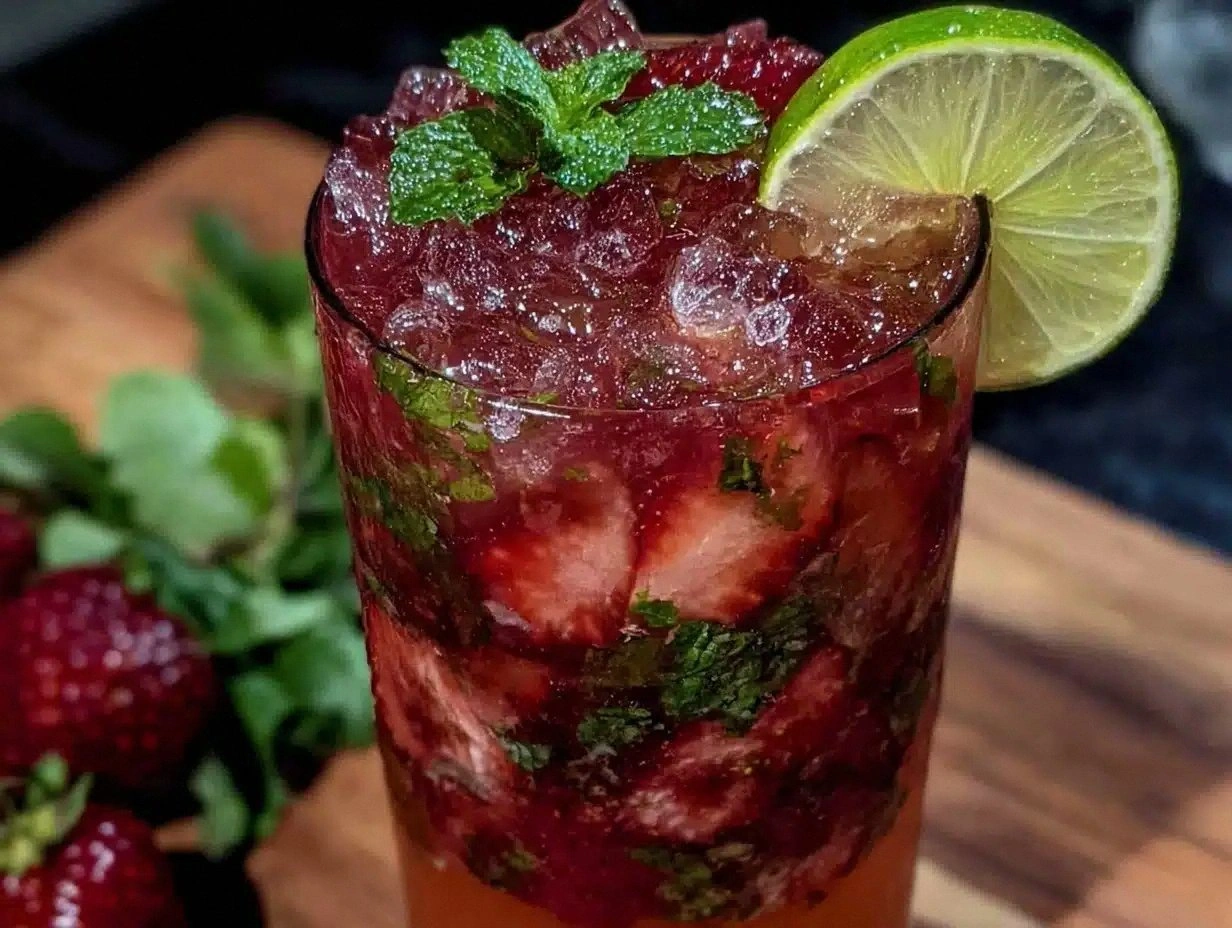
Picture this: I’m standing in my tiny kitchen, the clock ticking toward a Saturday night that’s supposed to be “low‑key,” but my friends keep texting, “What are we drinking?” I stared at a half‑empty bottle of white wine and a sad, wilted bunch of strawberries that had survived a week in the crisper. I thought, “If I can turn this disaster into something unforgettable, I might just become the party hero.” So I grabbed a splash of rose water, a handful of mint, and a mischievous grin, and the most scandalously good sangria ever was born. I dare you to taste this and not go back for seconds.
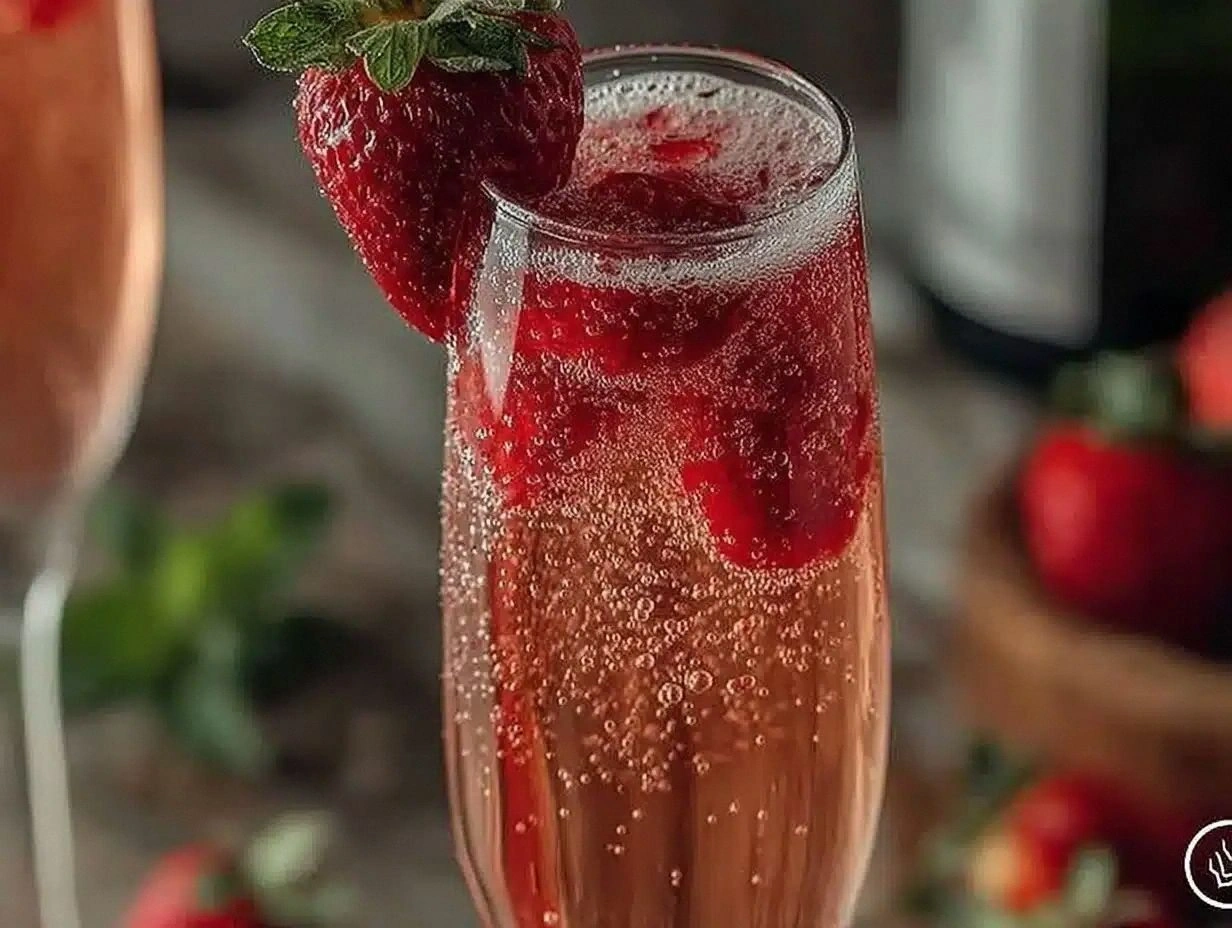
The first sip is a fireworks display for your palate. The crisp white wine snaps like a fresh breeze off a lake, while the strawberries melt into a ruby‑red velvet that coats your tongue in sweet sunshine. A whisper of rose water flirts with the mint, giving the drink a floral perfume that makes you feel like you’re sipping in a garden at dusk. You can almost hear the clink of ice cubes as they tumble into the glass, each one a tiny percussion instrument announcing the party’s start. It’s a full‑sensory experience that turns ordinary gatherings into unforgettable celebrations.
Why does this version stand out from every other sangria you’ve ever tried? Most recipes treat sangria like a lazy punch, dumping fruit and wine together and hoping for the best. I’m here to tell you that’s a crime against cocktail culture. The secret lies in layering flavors deliberately: the wine provides the backbone, the strawberries bring natural sweetness, the rose water adds a subtle perfume, and the mint injects a refreshing lift. Plus, the sparkling water gives it that effervescent sparkle that makes every sip feel like a celebration in a glass.
But here’s the kicker: I’m going to introduce a technique most home cooks overlook – a brief “marination” of the fruit in a sugar‑and‑mint syrup before the wine ever sees the bowl. This tiny step locks in flavor, prevents the berries from turning mushy, and creates a syrupy base that makes the sangria taste like it’s been steeping for days. Okay, ready for the game‑changer? Let me walk you through every single step — by the end, you’ll wonder how you ever made it any other way.
What Makes This Version Stand Out
- Flavor Depth: The combination of dry white wine and a splash of orange liqueur creates a layered palate that’s both bright and complex, unlike the one‑dimensional sweetness of most sangrias.
- Texture Harmony: Thinly sliced strawberries release juice without turning soggy, while the mint leaves stay crisp, giving each sip a satisfying bite.
- Simplicity Meets Sophistication: Fewer than ten ingredients, yet each one is thoughtfully chosen to elevate the whole, proving you don’t need a pantry full of exotic items to impress.
- Unique Aroma: A few drops of rose water turn the drink into a fragrant garden party, a twist most recipes completely miss.
- Crowd Reaction: I’ve watched guests line up for refills, eyes wide, whispering, “What’s in this?” That’s the kind of buzz you want at any gathering.
- Ingredient Quality: Using a crisp Sauvignon Blanc or Pinot Grigio ensures the base isn’t overly sweet, letting the fruit and floral notes shine.
- Make‑Ahead Magic: This sangria improves after a short rest, allowing flavors to meld – perfect for prep‑ahead parties.
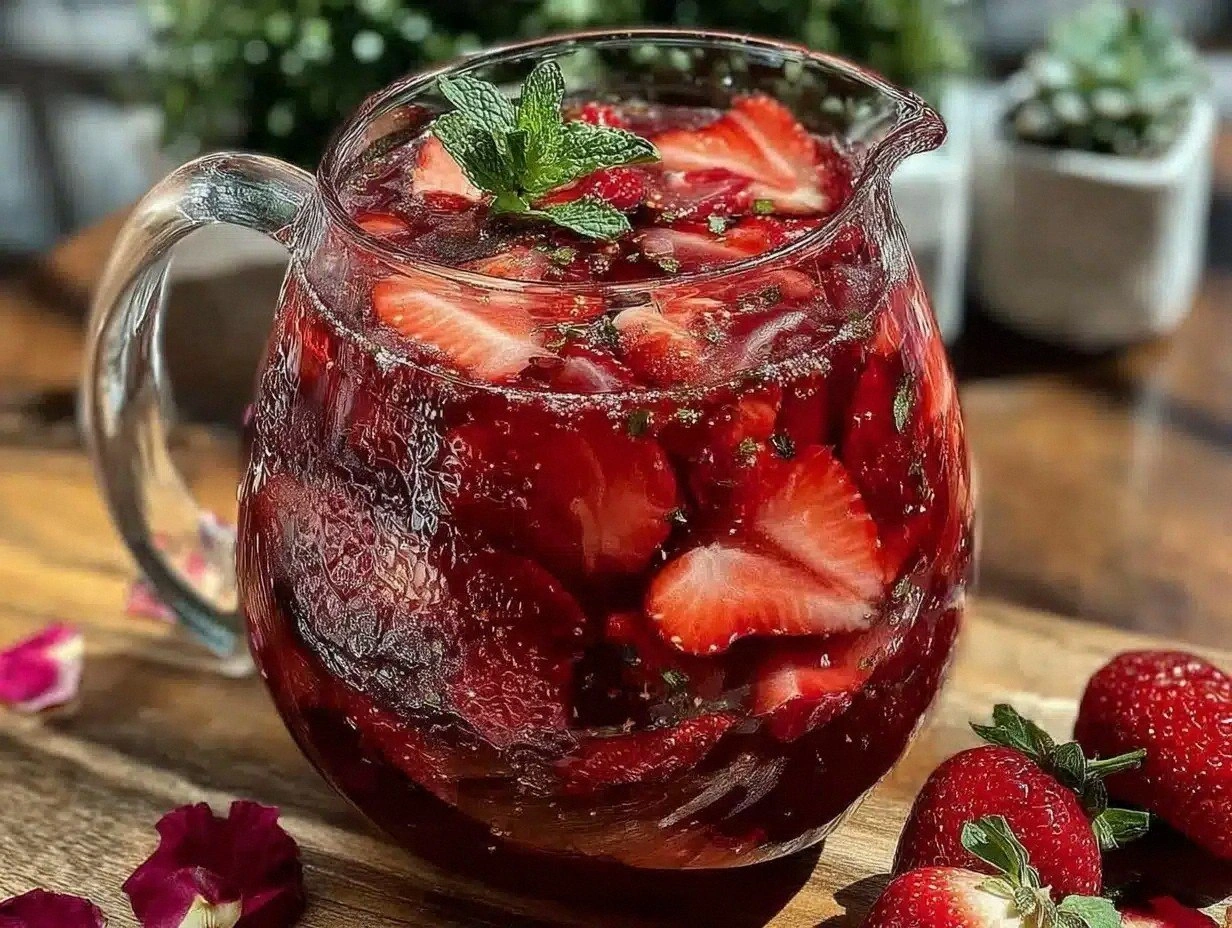
- Visual Wow Factor: The blush‑pink hue, speckled with bright red strawberries and green mint, makes it Instagram‑ready without any extra garnish.
Inside the Ingredient List
The Flavor Base
Dry white wine: This is the backbone of the sangria. I recommend a crisp Sauvignon Blanc or Pinot Grigio because their bright acidity balances the fruit’s sweetness. If you skip the wine, you lose that elegant structure, and the drink can become cloyingly sweet. A cheap “cooking wine” will introduce off‑notes that linger unpleasantly. When shopping, look for a bottle that smells of green apple and citrus – no buttery or oak‑heavy aromas.
The Sweet & Floral Crew
Strawberries: Fresh, ripe strawberries are essential. Their natural sugars melt into the wine, creating a silky texture that sugar alone can’t mimic. Slice them thinly so they release juice quickly; thick chunks will stay stubbornly firm and chew like rubber. If strawberries are out of season, frozen berries (thawed and drained) work, but the flavor won’t be as vibrant. Pro tip: choose berries with a deep red color and a fragrant scent – that’s the sweet spot.
Rose water: Just a few drops (about ½ tsp) add an ethereal floral note that transforms the drink from ordinary to extraordinary. Too much, and you’ll taste a perfume shop; too little, and you’ll miss the magic. Look for rose water in the baking aisle or specialty food section – it’s often sold in tiny glass bottles.
The Refreshing Lift
Fresh mint leaves: Mint injects a refreshing herbaceous bite that cuts through the wine’s acidity. Roughly tear the leaves before adding them; this releases essential oils without bruising the leaves into mush. If you skip mint, the sangria can feel flat and overly sweet. A good substitute is basil for a different herbaceous twist, but you’ll lose that classic coolness.
Sparkling water: Adding a splash of sparkling water right before serving gives the drink a lively fizz that makes each sip feel celebratory. Plain sparkling water works, but a hint of lemon‑infused soda adds a citrus zing. Be careful not to add it too early – the carbonation will dissipate, leaving a flat beverage.
The Finishing Touches
Orange liqueur: A splash of Cointreau or Triple Sec deepens the citrus profile and adds a subtle sweetness that harmonizes with the wine. If you’re avoiding alcohol, replace it with orange juice, but you’ll miss the nuanced depth that the liqueur provides.
Granulated sugar or honey: Optional, but a teaspoon or two can balance the acidity if your wine leans toward the dry side. I prefer honey for its floral undertones, which echo the rose water. Skip this if you like a dryer palate – the sangria will still be delicious.
Ice cubes & optional garnish: Ice keeps the drink chilled without diluting it too quickly, while edible flowers or extra strawberry slices elevate the presentation. If you forget the garnish, the drink still tastes amazing, but the visual impact drops a notch.
Everything's prepped? Good. Let's get into the real action…
The Method — Step by Step
Start by gathering a large, wide‑mouth pitcher – the kind that lets you see the colors swirl. Pour the entire bottle of dry white wine into the pitcher, letting it cascade like a waterfall. As the wine hits the bottom, you’ll hear a gentle sigh, a signal that the base is ready. This is the moment of truth: if the wine smells flat, you’ve already lost the battle.
Kitchen Hack: Chill the wine in the freezer for 10 minutes before using it; this speeds up the chilling process without risking a frozen bottle.While the wine settles, take your sliced strawberries and toss them with a tablespoon of granulated sugar (or honey) and a handful of torn mint leaves. Let this mixture sit for about 10 minutes. You’ll see the strawberries start to sweat, releasing a ruby‑red juice that mingles with the mint oil – a tiny, fragrant pool that looks like a mini‑spa for fruit.
Watch Out: If you let the strawberries sit too long, they’ll become mushy and turn the sangria cloudy. Aim for a 10‑minute window, no more.Now, drizzle the orange liqueur over the fruit‑sugar‑mint mixture. The alcohol will coax out the citrus oils from the orange liqueur, creating a fragrant veil that lifts the entire concoction. Give everything a gentle stir with a wooden spoon, feeling the texture of the berries against the spoon – they should feel supple, not wilted.
Time for the rose water. Add just ½ teaspoon (about five drops) directly into the pitcher. Watch as the liquid swirls, catching the light and turning a delicate pinkish hue. This step is pure magic; the scent is subtle but unmistakable, like walking through a rose garden at twilight.
Pour the fruit‑mint‑liqueur blend into the pitcher, letting the strawberry juices cascade into the wine. As they mingle, you’ll hear a soft fizz if you’ve already added a splash of sparkling water – but hold that thought for step 8. The mixture should look like a blush‑colored river flowing through a field of green mint.
Give the entire pitcher a gentle but thorough stir. Use a long spoon to reach the bottom, coaxing any settled fruit back into the liquid. This is where the flavors start to marry; you’ll notice a faint aroma of citrus, mint, and a whisper of roses. If you’re lucky, a tiny bubble will rise – that’s the fizz from the sparkling water you’ll add later.
Cover the pitcher with plastic wrap and refrigerate for at least 30 minutes, preferably an hour. This resting period is the secret that makes the sangria taste like it’s been steeping for days. While it chills, the wine absorbs the fruit’s sweetness, the mint infuses its herbaceous note, and the rose water settles into a harmonious background.
When you’re ready to serve, pull the pitcher out of the fridge and add the sparkling water – about 1 cup for a batch serving four. Stir gently; you’ll hear a lively fizz that signals the drink is alive. Finally, fill each glass with ice cubes, then ladle the sangria over the ice, ensuring each glass gets a generous handful of strawberries and a sprig of mint.
Top each glass with an optional garnish: a few edible flowers or an extra strawberry slice on the rim. This not only looks stunning but also adds a tiny burst of fresh flavor as the garnish meets the ice. Serve immediately, and watch your guests’ faces light up as they take that first, fragrant sip.
And there you have it – a strawberry rose sangria that’s as pretty as it is delicious. I’ll be honest — I ate half the batch before anyone else got to try it, but that’s only because it’s that good. Hold on, I’ve got a few more tricks that’ll take this to another level…
Insider Tricks for Flawless Results
The Temperature Rule Nobody Follows
Never, ever use room‑temperature wine. Chill your wine, your fruit, and even your pitcher before you start. The colder the components, the less dilution you’ll get from the ice, and the sharper the flavors will stay. I once tried a warm batch and ended up with a soggy, muted drink – lesson learned.
Why Your Nose Knows Best
Before you stir, take a deep sniff of the wine and the fruit mixture. If you don’t smell the rose water or mint, you’ve probably under‑dosed. Trust your nose more than the recipe; a few extra drops of rose water can make a world of difference, but never overdo it.
The 5‑Minute Rest That Changes Everything
Even if you’re in a rush, give the sangria at least five minutes after mixing before you add sparkling water. This short pause allows the flavors to meld, preventing the fizz from flattening the taste. Think of it as a “flavor nap” – the drink wakes up refreshed and more balanced.
Ice Cube Strategy
Use large, clear ice cubes instead of crushed ice. Bigger cubes melt slower, keeping the sangria chilled without watering it down. If you only have crushed ice, consider adding a few extra strawberries to maintain flavor intensity.
Garnish Like a Pro
Edible flowers aren’t just for looks; they add a faint botanical note that complements the rose water. Choose flowers like violets or pansies that are pesticide‑free. If you can’t find edible flowers, a simple twist of orange peel works wonders.
Creative Twists and Variations
This recipe is a playground. Here are some of my favorite ways to switch things up:
Berry‑Blast Remix
Swap half of the strawberries for raspberries or blackberries. The deeper berry tones add a richer color and a hint of tartness that pairs beautifully with the orange liqueur.
Citrus Sunrise
Add thin slices of orange and lemon to the fruit mix. The extra citrus brightens the drink, making it perfect for brunches where you want a sunrise vibe.
Herbal Harmony
Replace mint with fresh basil or thyme. Basil adds a sweet‑peppery note, while thyme offers an earthy undertone – both create a sophisticated twist that’s great for adult‑only gatherings.
Spiked Sparkle
For an extra kick, splash in a shot of vodka or gin before adding the sparkling water. The spirit lifts the alcohol content without overpowering the delicate floral notes.
Non‑Alcoholic Delight
Swap the dry white wine for sparkling white grape juice and the orange liqueur for orange‑infused sparkling water. You’ll still get the same bright flavors, perfect for a kid‑friendly party.
Winter Warmth (Hot Sangria)
Heat the wine gently with cinnamon sticks, star anise, and a splash of apple cider. Serve warm with a dollop of whipped cream for a cozy, festive twist.
Storing and Bringing It Back to Life
Fridge Storage
Transfer any leftovers to an airtight glass jar and store in the refrigerator for up to three days. The flavors will continue to develop, becoming even more harmonious. Before serving again, give it a quick stir and add a splash of sparkling water to revive the fizz.
Freezer Friendly
If you’ve made a large batch, freeze the sangria in individual silicone ice‑cube trays. Once frozen, pop the cubes into a pitcher, add a splash of fresh wine and sparkling water, and you have an instant, perfectly chilled drink. This method keeps the fruit from turning mushy and preserves the bright flavors.
Best Reheating Method
For the hot‑sangria variation, gently reheat on the stove over low heat, stirring occasionally. Add a tiny splash of water (about a tablespoon) before reheating; it creates a gentle steam that restores the drink’s silky texture without diluting the flavor.