I remember the night I was supposed to impress a group of culinary enthusiasts with a simple dinner, and the kitchen turned into a chaotic symphony of sizzling pans, burnt garlic, and a mango that had gone rogue. The mango, bright as a sunrise, slipped from my fingers and landed on the counter, a perfect opportunity that turned a disaster into a revelation. From that moment, I vowed to create a dish that would make mango and salmon dance together in a harmony that would make taste buds applaud. This recipe is the culmination of that promise.
Picture yourself standing over a hot skillet, the aroma of caramelized sugar and soy sauce mingling with the sweet fragrance of ripe mango. The sound of the fish hitting the pan is a crisp, satisfying sizzle that promises a golden crust. The first bite is a burst of umami, a hint of citrus, and the gentle sweetness of mango, all balanced by a subtle heat from ginger. The texture is a contrast: the salmon’s flaky interior wrapped in a glossy, sticky glaze that clings to your fork like a velvety coat. The heat from the skillet radiates through the room, and you can feel the anticipation building.
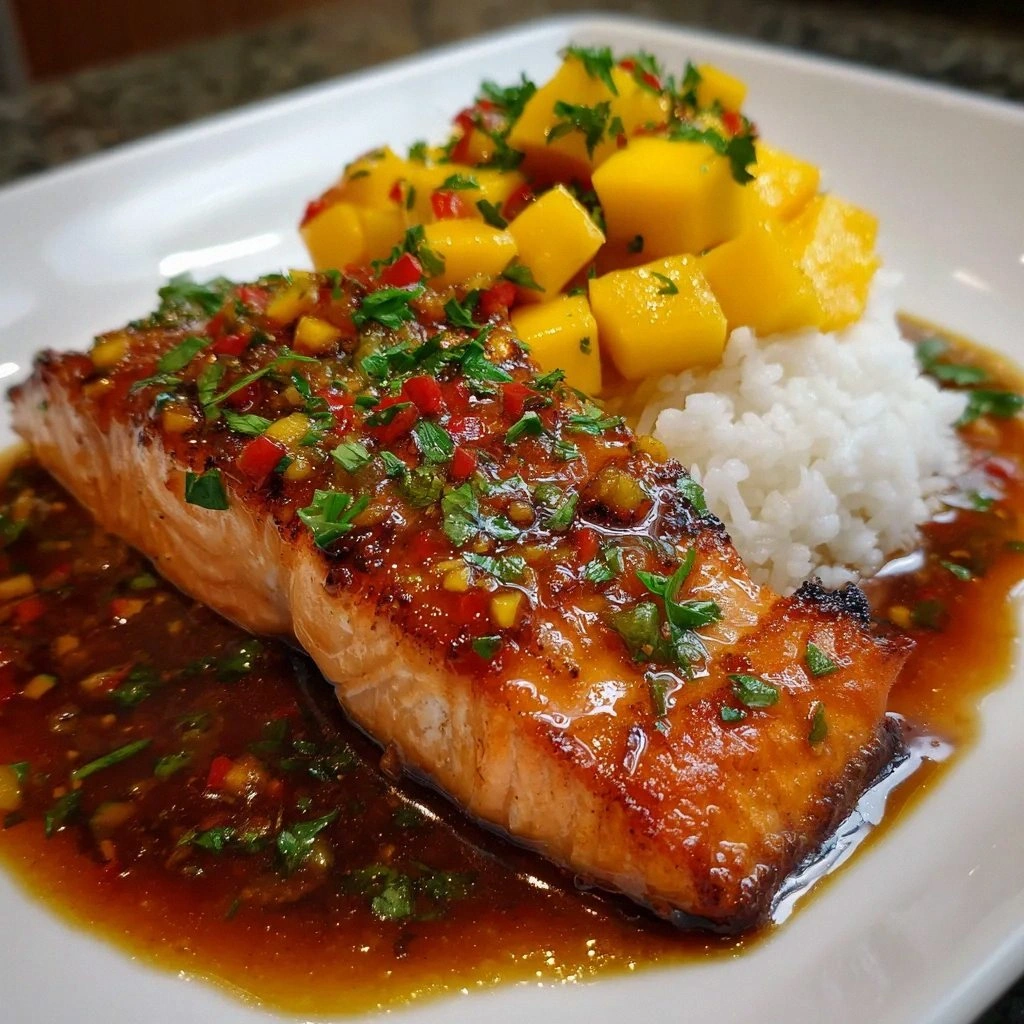
What makes this version stand out is that it is not just a recipe; it is a culinary experiment that redefines how sweet and savory can coexist. I’ve spent hours tweaking the ratios to achieve the perfect balance, and the result is a dish that is both comforting and adventurous. It’s a dish that will have your guests reaching for seconds, and I dare you to taste this and not go back for more. The sauce is a silky, glossy glaze that adheres to the salmon, creating a caramelized crust that crackles when you bite into it. The mango adds a natural sweetness that eliminates the need for added sugar, while the soy sauce provides depth and umami.
I’ll be honest—when I first tried this recipe, I ate half the batch before anyone else could even touch the plate. That’s the power of a dish that is both approachable and refined. Most recipes get this completely wrong, either by over-sweetening the sauce or undercooking the fish. Here’s what actually works: a balanced sauce, a quick sear, and a finishing step that locks in moisture. Picture yourself pulling this out of the oven, the whole kitchen smelling incredible, and knowing that the first bite will be the most memorable part of the evening. Okay, ready for the game‑changer? Let me walk you through every single step—by the end, you’ll wonder how you ever made it any other way.
What Makes This Version Stand Out
- Flavor: The sauce is a masterclass in balance, marrying sweet, salty, and umami flavors without overpowering the delicate salmon. The natural sweetness of mango replaces refined sugar, giving the glaze a fresh, tropical note.
- Texture: The salmon develops a golden, slightly crisp exterior while remaining tender and flaky inside. The glaze coats each bite like a silky, caramelized blanket.
- Simplicity: With just a handful of pantry staples and fresh ingredients, you can deliver a restaurant‑grade meal in under an hour.
- Uniqueness: The mango’s bright acidity cuts through the richness of the fish, creating a flavor profile that feels both exotic and familiar.
- Crowd‑pleaser: Whether it’s a family dinner or a dinner party, this dish receives rave reviews and repeat orders.
- Ingredient Quality: Fresh salmon, ripe mango, and high‑quality soy sauce are the backbone of this dish; every component contributes to the final masterpiece.
- Cooking Method: A quick sear followed by a glaze finish ensures the salmon stays moist and flavorful.
- Make‑ahead Potential: The sauce can be pre‑made and stored, and the salmon can be assembled ahead of time for a stress‑free dinner.
Alright, let’s break down exactly what goes into this masterpiece…
Inside the Ingredient List
The Flavor Base
Soy sauce and mirin form the backbone of the glaze, offering a deep umami foundation that balances the sweet mango. Soy sauce adds a savory depth that is essential for a well‑rounded sauce, while mirin’s subtle sweetness prevents the glaze from tasting too harsh. If you’re watching sodium, use low‑sodium soy sauce and taste before adding more.
The Texture Crew
The salmon fillets are the star, and their quality determines the dish’s success. Choose wild‑caught or sustainably farmed salmon for the best flavor and texture. The fish should be at room temperature before searing to ensure even cooking and a beautiful crust.
The Unexpected Star
Mango is the secret weapon that turns this dish into a tropical delight. A ripe mango, diced into bite‑sized cubes, brings natural sweetness and a hint of acidity that brightens the sauce. If mango is out of season, frozen mango chunks work, but fresh is preferred for maximum flavor.
The Final Flourish
Sesame seeds, green onions, and a splash of rice vinegar finish the dish with a subtle crunch, freshness, and a touch of acidity. These accents elevate the overall profile, giving the dish layers that keep the palate engaged. They also add visual appeal, making each bite a feast for the eyes.
Everything’s prepped? Good. Let’s get into the real action…
The Method — Step by Step
- Pat the salmon fillets dry with paper towels; this helps achieve a crisp sear. Season both sides lightly with salt and pepper, then let them rest at room temperature for 10 minutes. When the fillets are ready, heat a non‑stick skillet over medium‑high heat and add a splash of sesame oil. The oil should shimmer but not smoke; if it starts to smoke, reduce the heat slightly. Place the salmon skin‑side down and sear for 4–5 minutes until the skin is golden and releases easily from the pan. Flip and sear the other side for 2–3 minutes; the flesh should still be slightly translucent.
- While the salmon cooks, combine soy sauce, mirin, sake, sugar, minced garlic, grated ginger, and a splash of rice vinegar in a small saucepan. Bring to a gentle simmer over medium heat, stirring until the sugar dissolves. The sauce should thicken slightly and develop a glossy sheen; this indicates the sugars have caramelized. Once thickened, remove from heat and let it cool to room temperature—this prevents the sauce from overcooking the fish when it’s added.
- Add the diced mango to the sauce and stir gently. The mango should be submerged, allowing it to release its juices into the glaze. This step is crucial because the mango’s natural sugars will help the glaze caramelize when it’s applied to the salmon. Let the mixture sit for 5 minutes; the mango will soften and blend with the sauce’s flavors.
- Transfer the salmon fillets to a shallow baking dish lined with parchment paper. Pour the mango‑soy glaze over the fillets, ensuring each piece is coated evenly. The glaze will cling to the fish, forming a sticky, caramelized coating as it cooks. If you prefer a thicker glaze, reduce the sauce further before pouring.
- Preheat the oven to 400°F (200°C). Place the baking dish in the oven and bake for 10–12 minutes, or until the salmon reaches an internal temperature of 145°F (63°C). The glaze should be caramelized and slightly bubbly, indicating that the sugars have set into a glossy coat. Keep an eye on it; the glaze can brown quickly.
- While the salmon is baking, toast sesame seeds in a dry skillet over medium heat until golden and fragrant—about 2 minutes. This step enhances the nutty aroma and adds a subtle crunch to the final dish.
- When the salmon is done, remove it from the oven and let it rest for 2 minutes. This short rest allows the juices to redistribute, ensuring each bite is moist and tender. Drizzle a little extra glaze over the top if desired.
- Garnish with toasted sesame seeds, sliced green onions, and a drizzle of sesame oil. Serve immediately over steamed jasmine rice or a bed of mixed greens. The contrast between the warm, sweet glaze and the cool, fresh greens creates a satisfying bite.
- If you prefer a crispier texture, finish the salmon under the broiler for 1–2 minutes, watching closely to prevent burning. This step adds a caramelized crunch to the glaze.
- Enjoy the harmonious blend of flavors—sweet mango, savory soy, and the tender salmon—each bite a symphony of taste and texture.
That’s it—you did it. But hold on, I’ve got a few more tricks that will take this to another level…
Insider Tricks for Flawless Results
The Temperature Rule Nobody Follows
Cooking salmon at the right temperature is essential for a moist interior. Many people cook at high heat, which can dry out the fillets. I recommend searing at medium‑high heat for the first 4–5 minutes, then reducing to medium for the remainder. This technique ensures a crisp crust without overcooking the center.
Why Your Nose Knows Best
Smell is the most reliable indicator of doneness for fish. When the salmon is almost cooked, you’ll detect a subtle aroma of baked fish and caramelized glaze. Trust your nose to avoid overcooking—a slightly translucent center is perfectly safe.
The 5‑Minute Rest That Changes Everything
Letting the salmon rest for 5 minutes after baking allows the juices to redistribute throughout the fillet. This simple step prevents the fish from drying out and keeps it tender. The rest period also lets the glaze set into a glossy coat.
The Secret to a Perfect Glaze
The glaze’s consistency is key. If it’s too thin, it won’t stick to the salmon; if it’s too thick, it’ll become sticky and clumpy. Aim for a consistency that coats the back of a spoon. If it’s too thick, add a splash of water or rice vinegar to thin it out.
The Quick Broil Trick
For an extra caramelized finish, broil the salmon for 1–2 minutes after baking. Keep the oven door slightly ajar and watch closely; the glaze can go from golden to burnt in seconds. This trick adds a delightful crunch to the top layer.
Creative Twists and Variations
This recipe is a playground. Here are some of my favorite ways to switch things up:
Spicy Pineapple Teriyaki
Swap mango for fresh pineapple chunks and add a pinch of red pepper flakes. The pineapple’s acidity brightens the sauce, while the heat adds an exciting kick. This version is perfect for summer gatherings.
Herbed Citrus Salmon
Replace mango with a mix of orange and lemon zest, and add chopped fresh dill. The citrus notes give the dish a bright, aromatic profile that pairs wonderfully with grilled vegetables.
Garlic Butter Glaze
Omit soy sauce entirely and use a butter‑based glaze with garlic, lemon, and thyme. The butter adds richness, while the garlic keeps the flavor profile savory and robust.
Asian Fusion Wrap
Serve the salmon in a soft tortilla with shredded cabbage, sliced cucumber, and a drizzle of sriracha mayo. This wrap transforms the dish into a handheld meal, ideal for lunch or a picnic.
Salmon with Coconut Mango Sauce
Add coconut milk to the glaze for a creamy, tropical twist. The coconut balances the sweetness of mango, creating a velvety sauce that coats the salmon beautifully.
Salmon Sushi Bowls
Slice the cooked salmon into bite‑sized pieces and serve over sushi rice with avocado, cucumber, and a drizzle of the mango glaze. This bowl is a quick, satisfying meal that’s both healthy and indulgent.
Storing and Bringing It Back to Life
Fridge Storage
Store leftovers in an airtight container in the refrigerator for up to 3 days. Keep the glaze separate if you prefer a fresher taste when reheating. The salmon will maintain its moisture and flavor when reheated gently.
Freezer Friendly
Pack the salmon fillets and glaze in freezer‑safe bags, removing excess air. The dish can be frozen for up to 2 months. Thaw overnight in the refrigerator before reheating.
Best Reheating Method
Reheat in a preheated oven at 350°F (175°C) for 10 minutes. Add a splash of water or broth before reheating to keep the salmon moist. Finish with a quick broil for 1 minute to revive the glaze’s caramelized finish.