I still remember the day I accidentally created what would become my signature dessert. It was supposed to be a simple baklava for my mother-in-law's birthday, but somewhere between the third layer of phyllo and the honey syrup disaster waiting on my stovetop, I knocked the entire baking dish sideways. Forty minutes later, when I pulled what looked like a crumpled mess from the oven, my husband took one bite and demanded I make it for every family gathering forever. That serendipitous moment birthed this Baklava Cake — the love child of flaky, nutty baklava and tender, syrup-soaked cake that'll make you question why anyone bothers with regular cakes anymore.
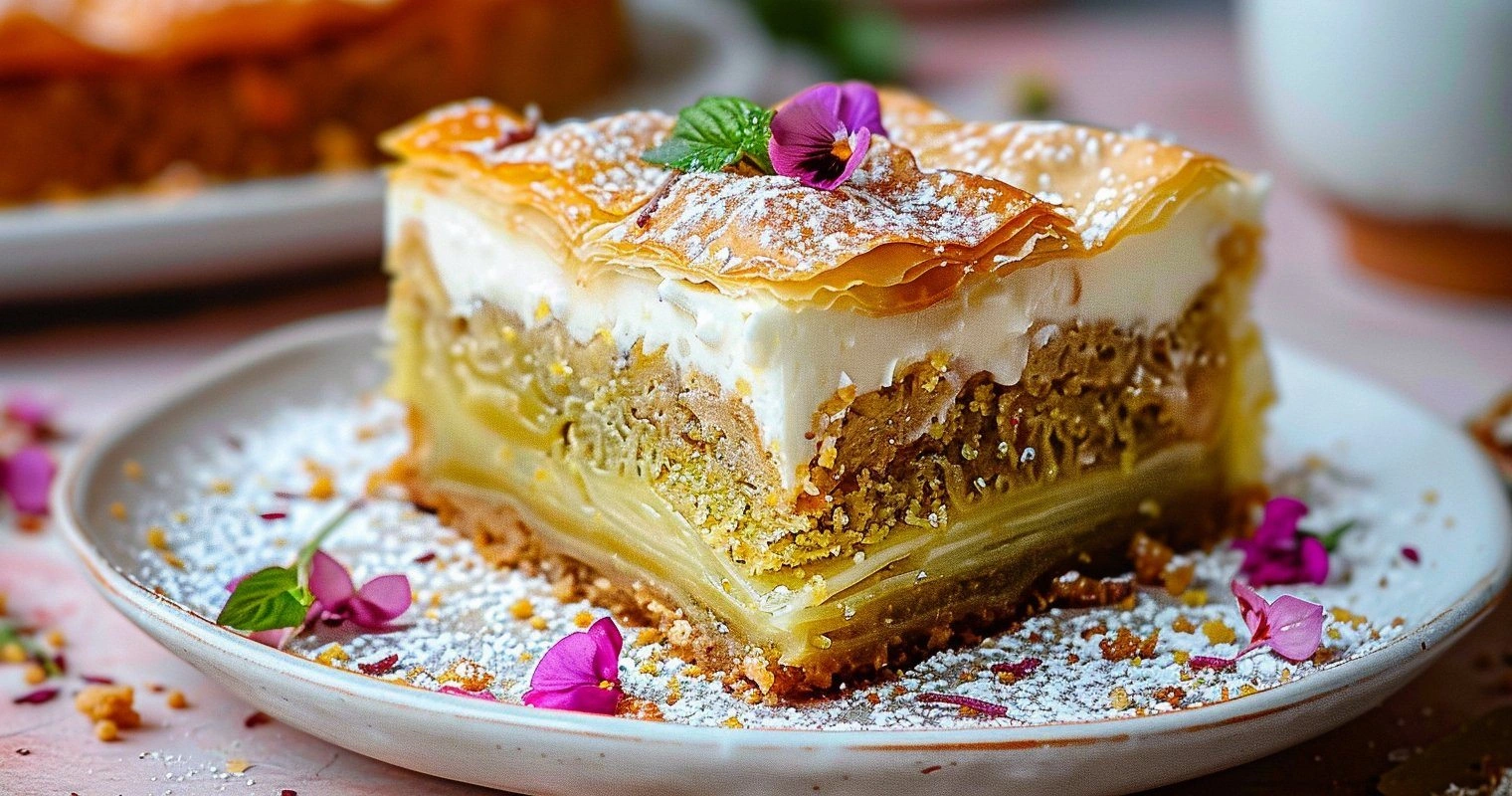
The first time you slice into this beauty, you'll understand why I'm obsessed. Picture this: your knife glides through golden layers of crispy phyllo that crackle like autumn leaves underfoot, revealing a tender cake interior studded with pistachios so vibrantly green they look photoshopped. The aroma hits you next — warm honey mingling with orange blossom water, cinnamon dancing with butter, and that intoxicating scent of toasted nuts that's basically aromatherapy for your soul. I dare you to taste this and not go back for seconds; I've watched self-proclaimed "not dessert people" demolish entire pans while claiming they were "just having a small piece."
What makes this version different from every other baklava cake recipe floating around the internet? Most recipes get this completely wrong — they either make a dry, sad cake with some nuts sprinkled on top, or they create a soggy mess that tastes like wet cardboard soaked in honey. My version layers the phyllo directly into the batter, creating these incredible pockets of flaky texture throughout the cake while still maintaining that signature baklava crunch on top. The secret lies in the syrup timing and the way we treat the nuts, but we'll get to that magic in a moment.
If you've ever struggled with baklava that turns rock-hard overnight or cake that's cloyingly sweet, you're not alone — and I've got the fix. This recipe transforms all those frustrations into one show-stopping dessert that stays perfectly moist for days (if it lasts that long, which in my house is never). Picture yourself pulling this out of the oven, the whole kitchen smelling incredible, your family already hovering like vultures. Let me walk you through every single step — by the end, you'll wonder how you ever made it any other way.
What Makes This Version Stand Out
Texture Play: This isn't just cake with nuts on top — we're creating a textural symphony where crispy phyllo shards dance with tender cake crumb, while chopped nuts provide satisfying crunch in every bite. The contrast between the syrup-soaked base and the caramelized top creates this incredible eating experience that keeps people coming back for more.
Flavor Bomb: Most versions rely on honey alone, but we're building layers of flavor with orange blossom water, cardamom, and a touch of rose water that makes the Middle Eastern bakery down the street jealous. The nuts get toasted before baking, intensifying their flavor and ensuring they don't taste raw or bland.
Foolproof Method: Traditional baklava requires the patience of a saint and the precision of a Swiss watchmaker. This cake version gives you all the flavors without the stress of handling paper-thin phyllo sheets individually. You literally just crumble them into the batter — it's therapeutic and impossible to mess up.
Make-Ahead Magic: Unlike regular baklava that can turn into a sugary brick overnight, this cake actually improves after sitting for a day. The syrup distributes evenly, the flavors meld together, and it stays remarkably moist for up to five days stored properly.
Visual Drama: When you turn this out onto a platter, it looks like you spent hours crafting individual baklava pieces. The golden top crackles dramatically, revealing glimpses of emerald pistachios and amber honey pools that make everyone reach for their phones before their forks.
Crowd Psychology: I tested this on the pickiest eaters I know — my book club friends who critique everything from wine pairings to napkin colors. The plate came back empty with requests for the recipe written in three different languages. This cake doesn't just feed people; it creates moments.
Inside the Ingredient List
The Flavor Base
Butter isn't just butter here — we're browning it first to develop those nutty, caramel notes that'll make your kitchen smell like a French bakery. The milk solids toast and deepen, creating this incredible flavor foundation that regular melted butter could never achieve. Don't skip this step even if you're tempted; it's what separates amateur bakes from professional results. You'll know it's ready when it smells like toasting hazelninks and turns amber with tiny brown flecks at the bottom.
The honey matters more than you'd think. Skip the generic bear bottle and grab something with character — orange blossom or wildflower honey brings floral notes that complement the nuts beautifully. Clover honey works in a pinch, but avoid anything labeled "honey blend" or "honey syrup" because those are cut with corn syrup and taste flat. The honey gets mixed into both the cake batter and the final syrup, so its flavor permeates every single bite.
The Texture Crew
Phyllo dough is the game-changer here, and I mean that literally — it changes the entire game of what cake can be. Don't stress about keeping it covered with a damp towel like traditional recipes demand; we're going to crumble it anyway, so let it dry out a bit. The drier phyllo actually works better here because it absorbs the butter and creates these incredible crispy pockets throughout the cake. Tear it into thumbnail-sized pieces, and don't worry about being neat — rustic is the look we're going for.
The nut mixture needs a balance of textures and flavors, which is why I use a trio of pistachios, walnuts, and almonds. Pistachios bring that gorgeous color and slightly sweet flavor, walnuts add earthy depth and soft crunch, while almonds provide the backbone that keeps everything from turning into nut paste. Buy them whole and chop them yourself — pre-chopped nuts are always stale and taste like cardboard.
The Unexpected Star
Orange blossom water might seem like an obscure ingredient, but it's what makes this cake taste authentically Middle Eastern rather than just nutty. A little goes a long way — too much and your cake will taste like perfume, but the right amount adds this ethereal floral note that makes people ask "what is that amazing flavor?" Find it at Middle Eastern markets or online, and once you have it, you'll start adding it to everything from tea to whipped cream.
Greek yogurt in the batter might sound weird, but it's what keeps this cake incredibly moist while adding a subtle tang that balances the sweetness. The acidity also helps tenderize the crumb, ensuring your cake stays soft even after soaking up all that syrup. Don't substitute with regular yogurt — the thickness of Greek yogurt is crucial for the right texture.
The Final Flourish
The syrup is where most recipes go wrong — they make it too thin (resulting in soggy cake) or too thick (creating a sticky mess). We're going for the Goldilocks zone: thick enough to coat a spoon but thin enough to seep into every crevice of the cake. The trick is cooking it to exactly 220°F, which takes about 8 minutes and gives you the perfect consistency.
Cardamom might seem expensive, but you only need a pinch and it makes all the difference. Buy whole pods if possible — they stay fresh forever and you can grind them as needed. The flavor is like citrus meets mint meets pepper, and it's what makes Middle Eastern desserts so addictive. Pre-ground cardamom loses its punch quickly, so skip it if you can't find whole pods.
Everything's prepped? Good. Let's get into the real action...
The Method — Step by Step
- Start by browning your butter because this step takes the longest and requires your full attention. Cut 1 cup (2 sticks) of butter into chunks and melt them in a light-colored pan over medium heat. The light color lets you see when the milk solids start to brown — within 5-7 minutes you'll see it foam, then the foam will subside and you'll notice tiny brown specks forming. Swirl the pan occasionally, and when it smells like you're making caramel popcorn, immediately pour it into a heatproof bowl to stop the cooking. Let it cool for 10 minutes while you prep everything else — this prevents scrambled eggs when you mix it later.
- While the butter cools, prep your phyllo like you're making edible confetti. Take 8 sheets of phyllo and stack them on your cutting board — no need to be gentle here, we're going to rough them up anyway. Using your hands, tear the sheets into roughly 1-inch pieces, letting them fall into a large bowl. The pieces should be irregular and varied in size — think rustic, not perfect. Don't worry about them drying out; slightly stale phyllo actually works better here because it absorbs more butter and stays crisp.
- Now for the nut mixture that'll make your kitchen smell like a Middle Eastern bazaar. In a dry skillet over medium heat, toast 1 cup each of chopped pistachios and walnuts plus 1/2 cup of sliced almonds. Stir constantly for 4-5 minutes until they smell incredibly fragrant and the almonds just start to turn golden. Transfer immediately to a plate to stop cooking — nuts continue toasting from residual heat and can burn quickly. Once cool, mix in 2 tablespoons of sugar, 1 teaspoon of cinnamon, and a pinch of salt.
- Time to bring it all together with the batter that'll transform into cake magic. In a large bowl, whisk together 3 eggs and 3/4 cup of sugar until pale and thick — this should take about 2 minutes of vigorous whisking or 45 seconds with an electric mixer. You're looking for ribbons that hold their shape for a second when you lift the whisk. Add 1 cup of Greek yogurt, 2 teaspoons of vanilla, 1 tablespoon of orange blossom water, and your cooled brown butter. The mixture should look glossy and smell incredible.
- In a separate bowl, whisk together your dry ingredients: 1 1/2 cups of flour, 2 teaspoons of baking powder, 1/2 teaspoon of baking soda, and 1/4 teaspoon of salt. Add this to your wet mixture in three additions, folding gently with a spatula. Don't overmix — stop as soon as you see no dry flour streaks. The batter should be thick but pourable, like Greek yogurt. If it seems too thick, add a tablespoon of milk; too thin, add a tablespoon of flour.
- This is the fun part where we create those signature baklava layers. Fold half of your phyllo pieces into the batter — they'll want to stick together, so use a cutting motion with your spatula to distribute them evenly. The phyllo should be coated but still visible as little white flecks throughout. Pour half the batter into a greased 9-inch springform pan, then sprinkle half the nut mixture over the top. Add the remaining batter and top with the rest of the nuts, pressing them gently so they adhere.
- Into the oven it goes for its transformation from batter to golden beauty. Bake at 350°F for 45-50 minutes, but start checking at 40 minutes. The top should be deep golden brown and a toothpick inserted should come out with just a few moist crumbs. The edges will start pulling away from the sides of the pan, and your kitchen will smell like you're running the best bakery in town. If the top is browning too quickly, tent it with foil for the last 10 minutes.
- While the cake bakes, prepare the syrup that'll take this from good to transcendent. In a small saucepan, combine 3/4 cup honey, 1/2 cup water, 1 tablespoon lemon juice, 2 cardamom pods (crushed), and a strip of orange zest. Bring to a boil, then reduce to a simmer for exactly 8 minutes — set your timer because timing is crucial here. The syrup should coat the back of a spoon but still be pourable. Remove from heat and stir in 1 teaspoon of orange blossom water.
- The moment of truth arrives when you pour that liquid gold over your warm cake. As soon as the cake comes out of the oven, use a skewer or toothpick to poke holes all over the surface — go deep but not all the way to the bottom. Slowly pour the warm syrup over the cake, letting it seep in before adding more. It'll seem like too much syrup, but trust the process. The cake will drink it all up and transform into this incredibly moist, flavor-packed dessert that defies logic.
- Patience is a virtue that'll be rewarded tenfold with this cake. Let it cool completely in the pan — I know it's torture, but cutting it while warm will result in a crumbly mess. Once cool, run a knife around the edge and remove the springform ring. The cake needs at least 2 hours for the syrup to distribute evenly, but overnight is even better. Dust with powdered sugar just before serving, and prepare for the compliments to roll in.
That's it — you did it. But hold on, I've got a few more tricks that'll take this to another level...
Insider Tricks for Flawless Results
The Temperature Rule Nobody Follows
Room temperature ingredients aren't just food blogger fluff — they're absolutely crucial here. Cold eggs won't incorporate properly, leading to a dense cake with weird pockets. Cold yogurt will seize up your brown butter, creating greasy lumps instead of a smooth batter. Take everything out of the fridge 30 minutes before you start, or speed things up by placing eggs in warm water for 5 minutes. A friend tried skipping this step once — let's just say it didn't end well, and her cake had the texture of a rubber tire.
Why Your Nose Knows Best
Trust your senses more than your timer when toasting nuts. They go from perfect to burnt in under 30 seconds, so stand there and watch them like they're your favorite TV show. When they smell like you're walking past a nut vendor at a state fair, they're done. Remove them immediately from the hot pan because they'll keep cooking from residual heat. I once turned my back for what felt like seconds and ended up with $15 worth of expensive pistachios that tasted like charcoal.
The 5-Minute Rest That Changes Everything
After pouring the syrup, resist the urge to immediately release the cake from the pan. Let it sit for 5 minutes to allow the syrup to set slightly around the edges. Then run a thin knife around the inside edge before removing the springform ring. This prevents the syrup from running down the sides and making the cake stick to the pan. The result is clean edges that look like they came from a professional bakery.
The Syrup Consistency Secret
Here's what separates amateur baklava cake from the stuff that makes people close their eyes when they taste it. Your syrup should be the consistency of warm maple syrup — pourable but not watery. If it's too thin, it'll make your cake soggy; too thick and it won't soak in properly. The 8-minute simmer is non-negotiable, but if you're unsure, drop a small amount on a cold plate. It should form a bead that holds its shape but still spreads slightly.
Creative Twists and Variations
This recipe is a playground. Here are some of my favorite ways to switch things up:
The Chocolate Rebel
For the chocoholics who can't imagine dessert without cocoa, replace 1/4 cup of flour with good quality cocoa powder and add 1/2 cup of mini chocolate chips to the nut mixture. The bitterness of the chocolate plays beautifully against the honey syrup, creating this sophisticated flavor profile that tastes like something from a Parisian patisserie. Use dark chocolate chips so they don't disappear into the cake — you want those melty pockets of chocolate in every bite.
The Tropical Escape
Swap the orange blossom water for coconut extract and replace half the nuts with toasted coconut flakes. Add some lime zest to the syrup and serve with a scoop of coconut ice cream. This version tastes like a tropical vacation and is particularly amazing in summer when you want something exotic but not heavy. The coconut adds this incredible texture that makes people ask "what is that amazing flavor?"
The Spice Market Special
Add 1 teaspoon of ground cardamom and 1/2 teaspoon of ground cloves to the batter, and replace the cinnamon with a mix of allspice and nutmeg. This creates a warmer, more complex flavor that tastes like you're wandering through a Moroccan spice souk. It's particularly good around the holidays when you want something that tastes like Christmas but isn't another gingerbread.
The Nut-Free Wonder
For friends with allergies, replace the nuts with an equal amount of toasted pumpkin seeds and sunflower seeds. The seeds provide great crunch and toast up beautifully, while the honey syrup ensures you still get that sticky-sweet experience. Add some dried cranberries to the seed mixture for pops of tartness that balance the sweetness perfectly.
The Breakfast Version
Reduce the sugar by 1/4 cup and serve this slightly warm for brunch with strong coffee. The reduced sweetness makes it feel more acceptable as a morning treat, while the nuts and honey provide enough energy to fuel your day. I've served this at brunch parties where it disappeared faster than the mimosas.
The Individual Portions
Make this in a muffin tin for individual baklava cakes — perfect for portion control (though I won't judge if you eat three). Reduce the baking time to 18-20 minutes and spoon the syrup over each little cake. These are dangerously addictive and make incredible gifts when packaged in cute boxes with ribbons.
Storing and Bringing It Back to Life
Fridge Storage
Wrap individual slices tightly in plastic wrap, then store in an airtight container in the fridge for up to 5 days. The cold firms up the syrup, so let slices come to room temperature for 30 minutes before serving — this allows the flavors to bloom and the texture to soften. I actually prefer it slightly chilled because the contrast between the cold cake and warm honey drizzle is absolutely divine. If it lasts more than 3 days in your house, you're stronger than I am.
Freezer Friendly
This cake freezes beautifully, which is dangerous because it means you can have baklava cake whenever the craving hits. Wrap slices individually in plastic wrap, then foil, and freeze for up to 2 months. Thaw overnight in the fridge, then let come to room temperature before serving. The phyllo won't be quite as crisp as fresh, but the flavor is still incredible. Pro tip: freeze slices before adding syrup, then make fresh syrup when you're ready to serve.
Best Reheating Method
If you must reheat (though room temperature is best), wrap a slice in foil with a tiny splash of water and warm at 300°F for 8-10 minutes. The water creates steam that rehydrates the cake without making it soggy. Never microwave this — it'll turn the phyllo rubbery and the nuts soft. A friend tried microwaving once and ended up with something that resembled sweet cardboard.