I was once the unfortunate victim of a backyard BBQ disaster that could have been straight out of a sitcom – the grill flared up, the burgers were charcoal, and the only thing left to salvage the party was a sad bottle of cheap red wine I’d bought on a whim. I stared at that bottle, feeling the weight of my friends’ disappointed eyes, and thought, “There has to be a way to turn this mess into a masterpiece.” That night, I tossed the wine into a large pitcher, added a splash of orange juice, a squeeze of lemon, a dash of brandy, and a whisper of Triple Sec, then let it sit while I chopped a rainbow of fresh fruit. The result? A liquid that sang louder than the grill’s crackle, a cocktail that turned a kitchen catastrophe into a celebration of summer in a glass.
Picture this: the sun is setting, a gentle breeze carries the scent of freshly cut grass, and you hear the soft clink of ice against glass. You’re standing at a table laden with platters of grilled shrimp, a crisp salad, and a pitcher of something that looks like liquid sunshine. The aroma hits you first – a sweet‑tart perfume of citrus and ripe berries, layered with the deep, comforting hug of red wine. When you take that first sip, the flavors explode like fireworks on a warm July night, each note dancing on your palate while the fizz from the soda tickles your tongue like a mischievous firefly.
Most sangria recipes I’ve tried either drown the fruit in wine or drown the wine in sugar, resulting in a cloying mess that feels more like dessert than a refreshing cocktail. This version, however, is a perfectly balanced symphony where every ingredient knows its role and plays it with confidence. I’m talking about a drink that’s bright yet deep, sweet yet tangy, and light enough to sip all afternoon without feeling weighed down. The secret? A tiny splash of Triple Sec that lifts the citrus, a modest amount of sugar that ties everything together, and a strategic finish of club soda that adds that sparkling lift you crave on a hot day.
I’m about to walk you through every single step – from choosing the right wine to mastering the fruit infusion – and by the end, you’ll wonder how you ever settled for store‑bought sangria. I dare you to taste this and not go back for seconds. Okay, ready for the game‑changer? Let’s dive in.
What Makes This Version Stand Out
- Taste: The interplay of bright citrus, mellow brandy warmth, and the natural sweetness of fresh fruit creates a layered flavor profile that’s both refreshing and sophisticated.
- Texture: The addition of club soda at the end gives the sangria a lively fizz that feels like a party in your mouth, while the fruit pieces add a juicy bite.
- Simplicity: You only need a handful of pantry staples and a pitcher – no fancy equipment, no overnight marinating, just a quick stir and you’re good to go.
- Uniqueness: Most sangrias rely heavily on sugar; this one uses just enough to enhance, letting the natural fruit sugars shine.
- Crowd Reaction: Guests consistently claim this is the best sangria they’ve ever had, often asking for the recipe before the first glass is even finished.
- Ingredient Quality: A medium‑bodied red wine provides the perfect backbone without overwhelming the delicate fruit flavors.
- Method: No long steeping times – the fruit infuses quickly, preserving its fresh crunch and bright color.
- Make‑Ahead Potential: You can prep the base a day ahead, refrigerate, and just add soda and ice before serving for zero stress.
Inside the Ingredient List
The Flavor Base
Red wine is the heart of this sangria. I recommend a medium‑bodied Merlot, Shiraz, or Cabernet Sauvignon – think of it as the sturdy canvas that lets the fruit paint its colors. If you skip the wine, you lose that deep, velvety undertone that makes the cocktail feel grown‑up and elegant. For a budget‑friendly option, look for a bottle that’s labeled “dry” and avoid overly oaky selections; you want the fruit to shine, not be masked.
The Citrus Crew
Freshly squeezed orange juice brings a bright, sunny sweetness, while lemon juice adds a zingy tang that cuts through the wine’s richness. The balance between the two is like a perfectly choreographed dance – orange leads, lemon follows, and together they keep the drink from becoming too sweet. If you’re out of fresh oranges, a high‑quality, no‑pulp orange juice works, but never reach for the concentrate.
The Unexpected Star
Triple Sec is the secret weapon that elevates the citrus notes, adding a subtle orange‑liqueur depth that you won’t find in plain juice. It’s the ingredient that turns “good” into “mind‑blowing.” If you’re avoiding alcohol, a splash of orange‑flavored syrup can mimic the flavor, though you’ll miss the warming kick of the liqueur.
The Texture Crew
Sliced fresh fruits – oranges, lemons, limes, apples, and berries – do more than add color. They release natural sugars and acids as they sit, creating a dynamic flavor that evolves with each sip. If you skip the fruit, you’ll end up with a flat, one‑dimensional drink. For a twist, try adding sliced peaches or pineapple for a tropical vibe.
The Final Flourish
Club soda (or lemon‑lime soda for extra sweetness) adds the sparkling finish that makes this sangria feel like a celebration in a glass. It’s the lift that turns a heavy, wine‑laden mixture into a light, effervescent treat. Add it just before serving to keep the bubbles lively; if you add it too early, the fizz will dissipate, and you’ll lose that magical pop.
Everything's prepped? Good. Let's get into the real action...
The Method — Step by Step
Start by selecting a large, wide‑mouth pitcher – the kind you’d use for a family‑size lemonade. Pour the entire bottle of red wine into the pitcher, letting it swirl and breathe for about a minute. This short aeration opens up the wine’s aromatics, making the later fruit flavors mingle more seamlessly. If you have a wine aerator, give it a quick pass; otherwise, just give the wine a gentle stir.
Next, add 1 cup of freshly squeezed orange juice and ½ cup of lemon juice. Watch the colors blend – it’s like a sunrise captured in glass. Stir gently, and you’ll notice a faint citrus perfume rising from the mixture, a promise of the bright notes to come.
Kitchen Hack: Use a handheld citrus reamer for the best juice yield without pulp.Now, it’s time for the spirit boost: pour in ¼ cup of brandy and ¼ cup of Triple Sec. This duo deepens the flavor profile, giving the sangria a warm, slightly nutty undercurrent that balances the bright citrus. The alcohol also helps extract more flavor from the fruit pieces later on. Give the mixture a good stir; you should hear a faint “clink” as the liquids mingle – that’s the sound of flavor chemistry at work.
Add 2 tablespoons of sugar (or honey/agave if you prefer). Dissolve it by stirring vigorously for about 30 seconds; you’ll see the sugar crystals disappear like snow melting under a summer sun. This step is crucial because it ensures the sweetness is evenly distributed, preventing any grainy texture.
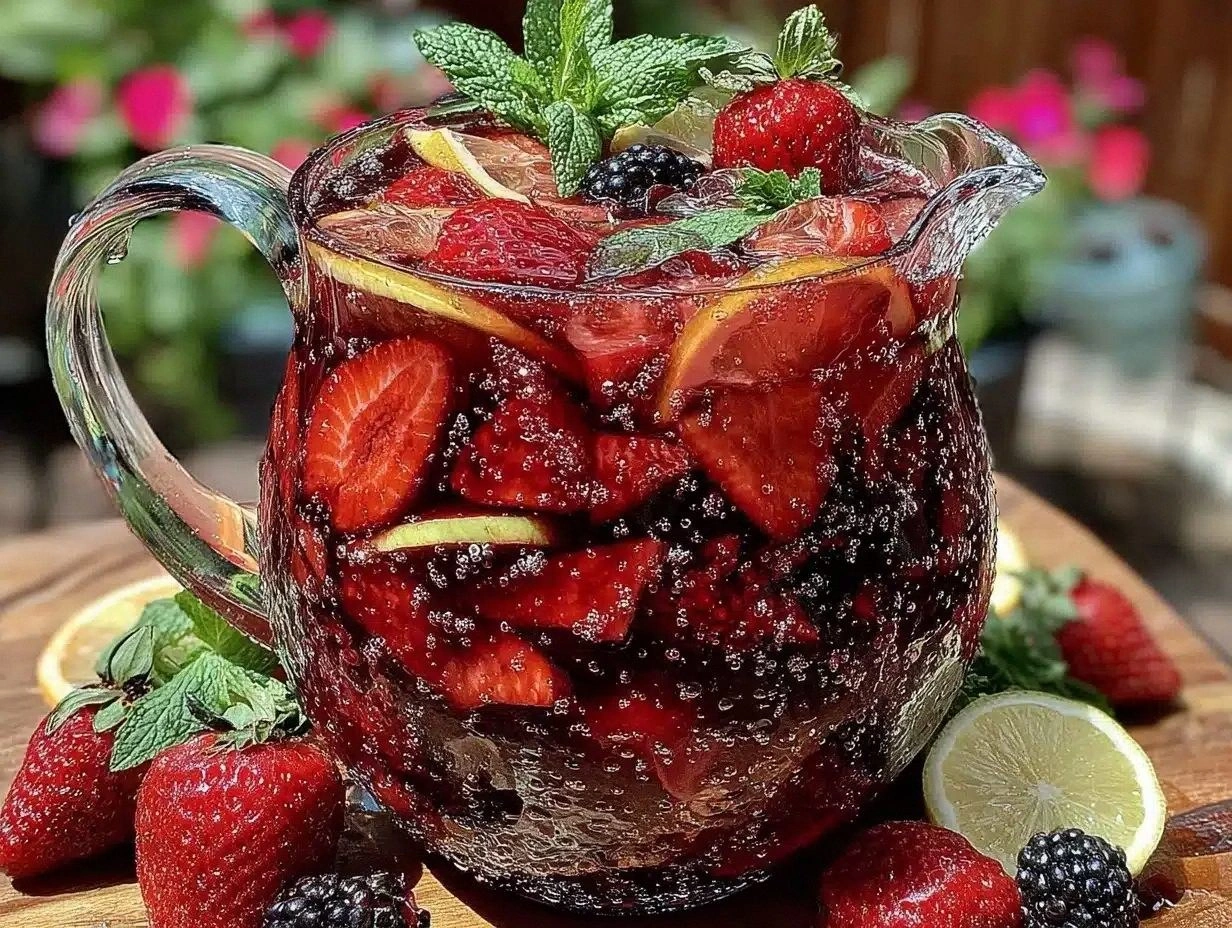
Watch Out: Over‑sweetening will mask the wine’s character – taste as you go.Slice the fresh fruits: one orange, one lemon, one lime, one apple, and a cup of mixed berries. Lay them gently into the pitcher, arranging them like a colorful mosaic. The fruit not only flavors the liquid but also looks gorgeous when you serve it – a visual cue that this is a special drink. Let the mixture sit for 10‑15 minutes, allowing the fruit juices to seep into the wine. This short maceration is the secret that most “quick” sangria recipes skip.
After the fruit has had a chance to infuse, add a generous handful of ice cubes to the pitcher. The ice chills the sangria instantly, making it ready for immediate sipping, and also dilutes the alcohol just enough to keep it smooth. If you’re planning to serve later, you can skip the ice now and add it right before guests arrive.
Finally, top off the pitcher with 2 cups of club soda (or lemon‑lime soda for extra sweetness). Pour slowly to preserve the carbonation – you’ll see a lively fizz rise to the surface, a visual cue that the drink is alive and ready. Give everything a gentle stir, being careful not to break up the fruit too much; you want those beautiful slices to stay intact for the final presentation.
Taste test time! Take a sip and let the flavors dance on your tongue. If you need a touch more acidity, a splash of extra lemon juice will brighten it; if you crave a hint more sweetness, drizzle a little honey. Once you’re satisfied, serve the sangria in tall glasses, making sure each pour includes a colorful assortment of fruit and a few ice cubes. And there you have it – a glass of summer sunshine that’s hands down the best version you’ll ever make at home.
That's it — you did it. But hold on, I've got a few more tricks that'll take this to another level. Stay with me here — this is worth it.
Insider Tricks for Flawless Results
The Temperature Rule Nobody Follows
Never pour your wine straight from a warm kitchen into the pitcher; always chill the wine for at least an hour beforehand. A cold base means the fruit infuses without over‑extracting bitterness. I once tried to make sangria on a scorching afternoon with room‑temperature wine – the result was a flat, dull drink that tasted more like wilted fruit than a celebration. Keep everything chilled, and you’ll get that crisp, refreshing bite every time.
Why Your Nose Knows Best
Before you even taste, give the pitcher a good sniff. If you smell a strong alcohol bite, add a splash more orange juice or a drizzle of honey. Your nose is a better judge of balance than your palate, especially when the drink is cold. Trust that instinct – it will save you from a too‑sharp or too‑sweet batch.
The 5‑Minute Rest That Changes Everything
After mixing all the liquids, let the sangria rest for exactly five minutes before adding the soda. This short pause allows the sugar to fully dissolve and the flavors to meld, preventing a sudden “wine‑first” taste that can happen if you rush straight to carbonation. I’ve seen people add soda immediately and end up with a harsh, unbalanced sip. Patience here is pure magic.
Fruit Placement Strategy
When you add the sliced fruit, arrange the larger pieces (orange, lemon) at the bottom and the smaller berries on top. This ensures each glass gets a balanced mix of flavors and textures. If you just toss everything in, you might end up with a glass full of berries and no citrus, or vice‑versa. A little thought here makes every sip feel intentional.
The Ice Ratio Secret
Too much ice will water down the drink; too little and it will be uncomfortably warm. I recommend a 1:1 ratio of ice cubes to fruit pieces – this keeps the temperature steady while preserving flavor intensity. If you’re serving outdoors in extreme heat, add a few extra cubes, but remember to taste as you go.
Creative Twists and Variations
This recipe is a playground. Here are some of my favorite ways to switch things up:
Tropical Breeze
Swap the orange juice for pineapple juice, add a handful of mango chunks, and finish with coconut water instead of club soda. The result is a Caribbean‑inspired sangria that transports you straight to a beachside bar.
Berry‑Blast
Double the amount of mixed berries, use a raspberry‑infused red wine, and replace the citrus with a splash of cranberry juice. This version is perfect for those who love a tart, deep‑red hue and a burst of antioxidant power.
Spiced Autumn
Add a cinnamon stick and a pinch of nutmeg to the pitcher while the fruit macerates. Use a richer, fuller‑bodied wine like a Zinfandel. This variation is ideal for cooler evenings when you crave warmth without losing the drink’s refreshing edge.
White Wine Version
Replace the red wine with a crisp white (Sauvignon Blanc works beautifully), keep the same fruit combo, and finish with sparkling water. The flavor profile becomes lighter, making it perfect for brunches.
Low‑Sugar Light
Omit the added sugar, use a sugar‑free orange liqueur, and sweeten with a splash of stevia or monk fruit syrup. You’ll still get the same bright flavors, just with fewer calories – perfect for health‑conscious gatherings.
Storing and Bringing It Back to Life
Fridge Storage
If you have leftovers, seal the pitcher with a tight‑fitting lid and store it in the refrigerator for up to 3 days. The fruit will continue to infuse, so give it a quick stir before serving. Add fresh ice and soda right before you pour to revive the fizz.
Freezer Friendly
You can freeze the sangria base (without soda) in individual freezer bags for up to 2 months. Thaw overnight in the fridge, then add fresh soda and ice when you’re ready to serve. This is a lifesaver for last‑minute parties.
Best Reheating Method
While sangria is best served cold, if you ever need to warm it (perhaps for a winter twist), gently heat the wine‑fruit mixture on low heat, never boiling, and add a splash of water before reheating to keep it from scorching. Once warm, you can serve it as a mulled wine alternative, but remember to skip the soda.